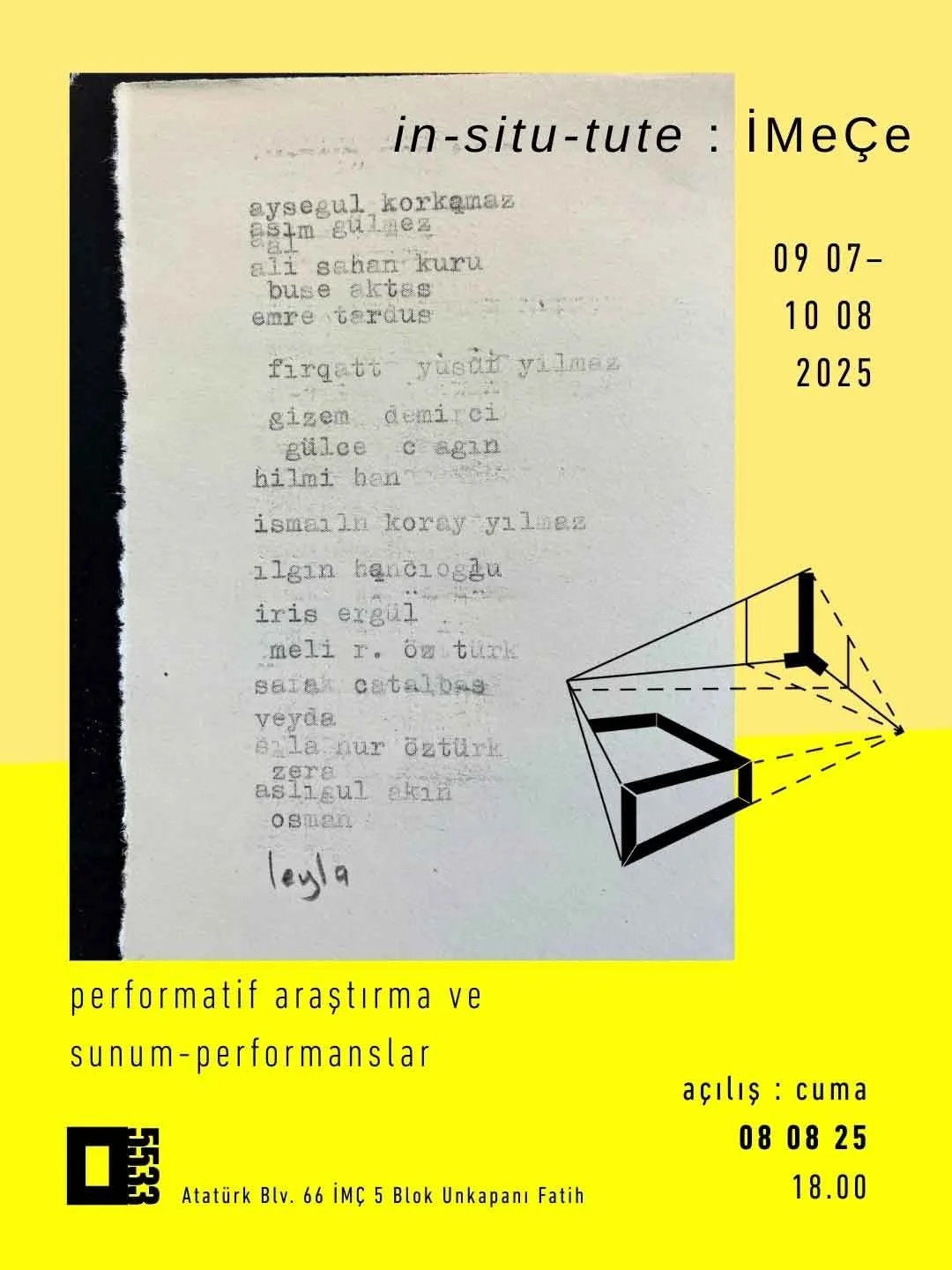
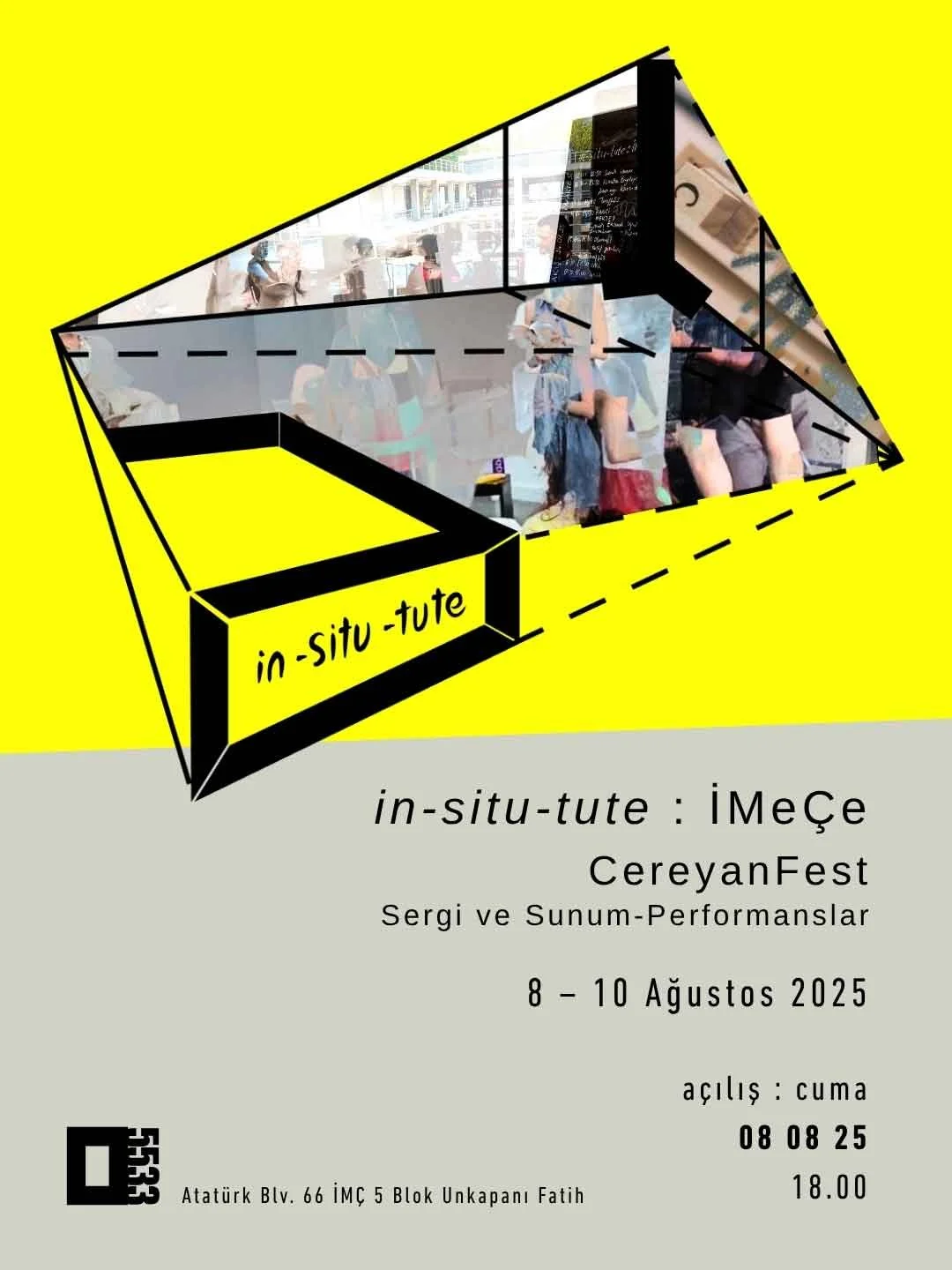
in-situ-tute: İMeÇe by HemCereyan
HemCereyan is a multi-disciplinary art collective focusing on site-specific, process-oriented performative artistic research projects.
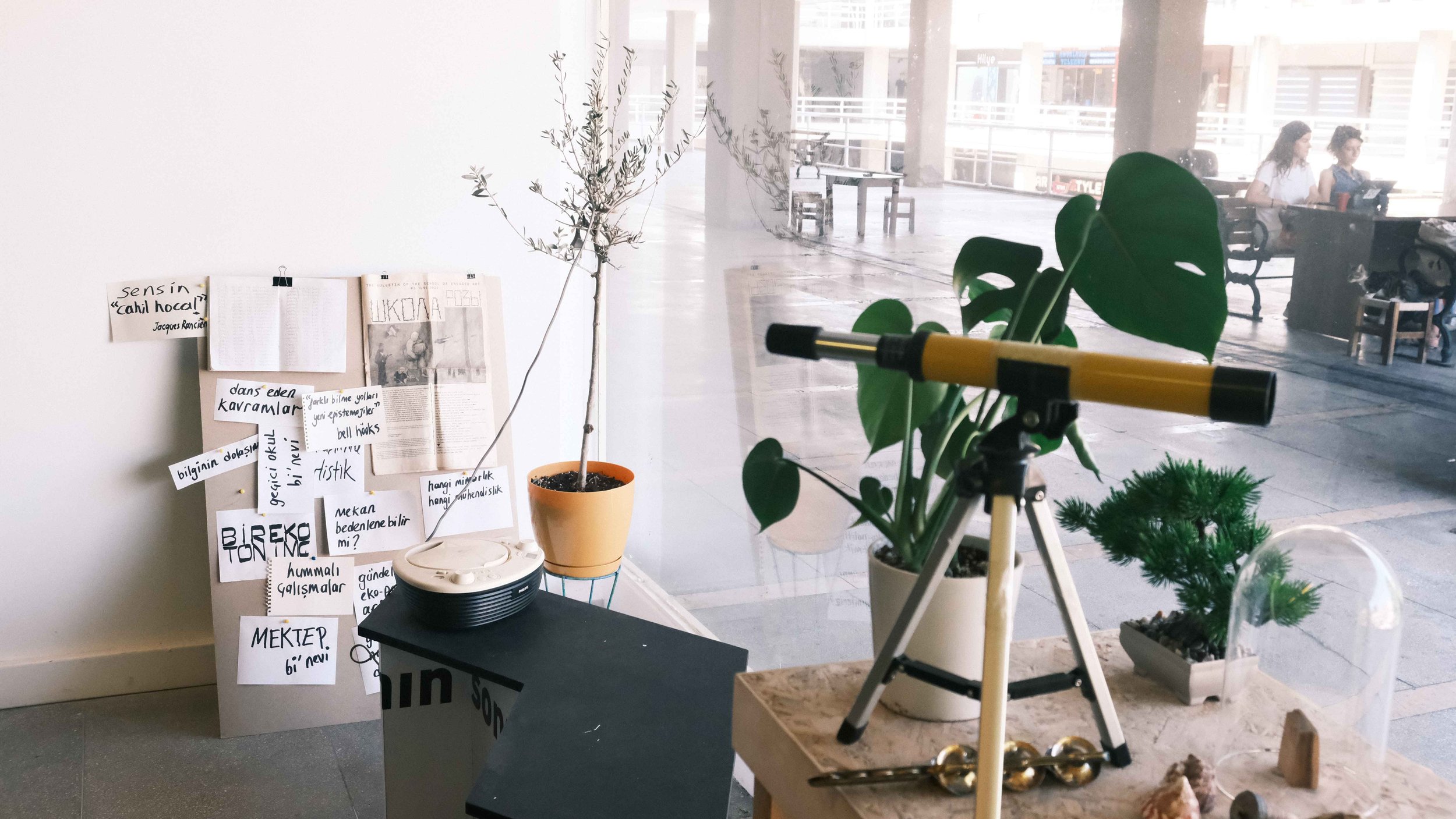
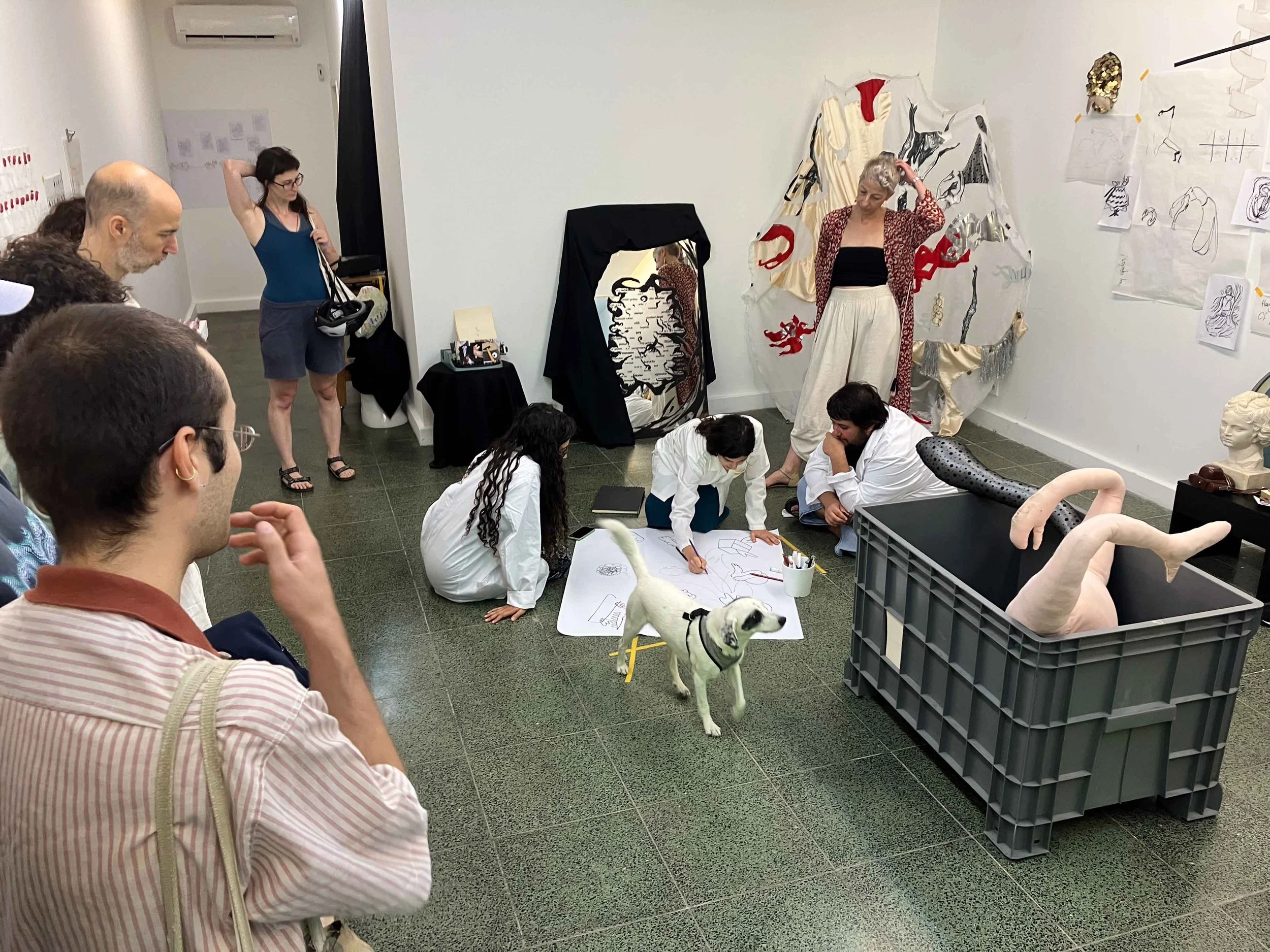
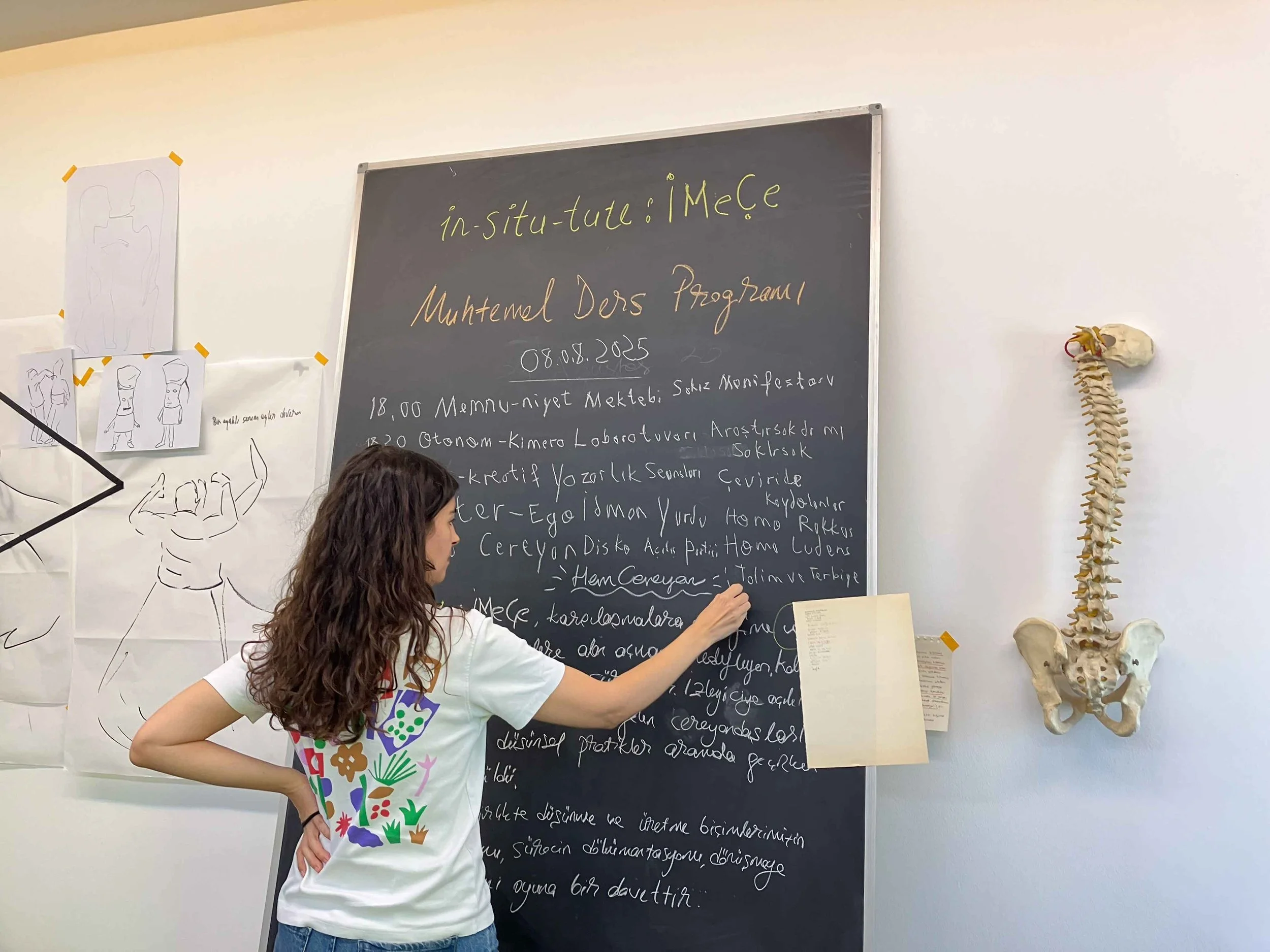
İMÇ 5533 hosted the collective’s project in-situ-tute: İMeÇe, which was a performative research process creating space for unexpected encounters and multi-voiced co-productions. With its experimental, critical, and heterotopic structure, in-situ-tute functioned like a school embedded within the architecture and sociopolitical ecologies of İMÇ. It encompassed interconnected work and co-learning spaces.
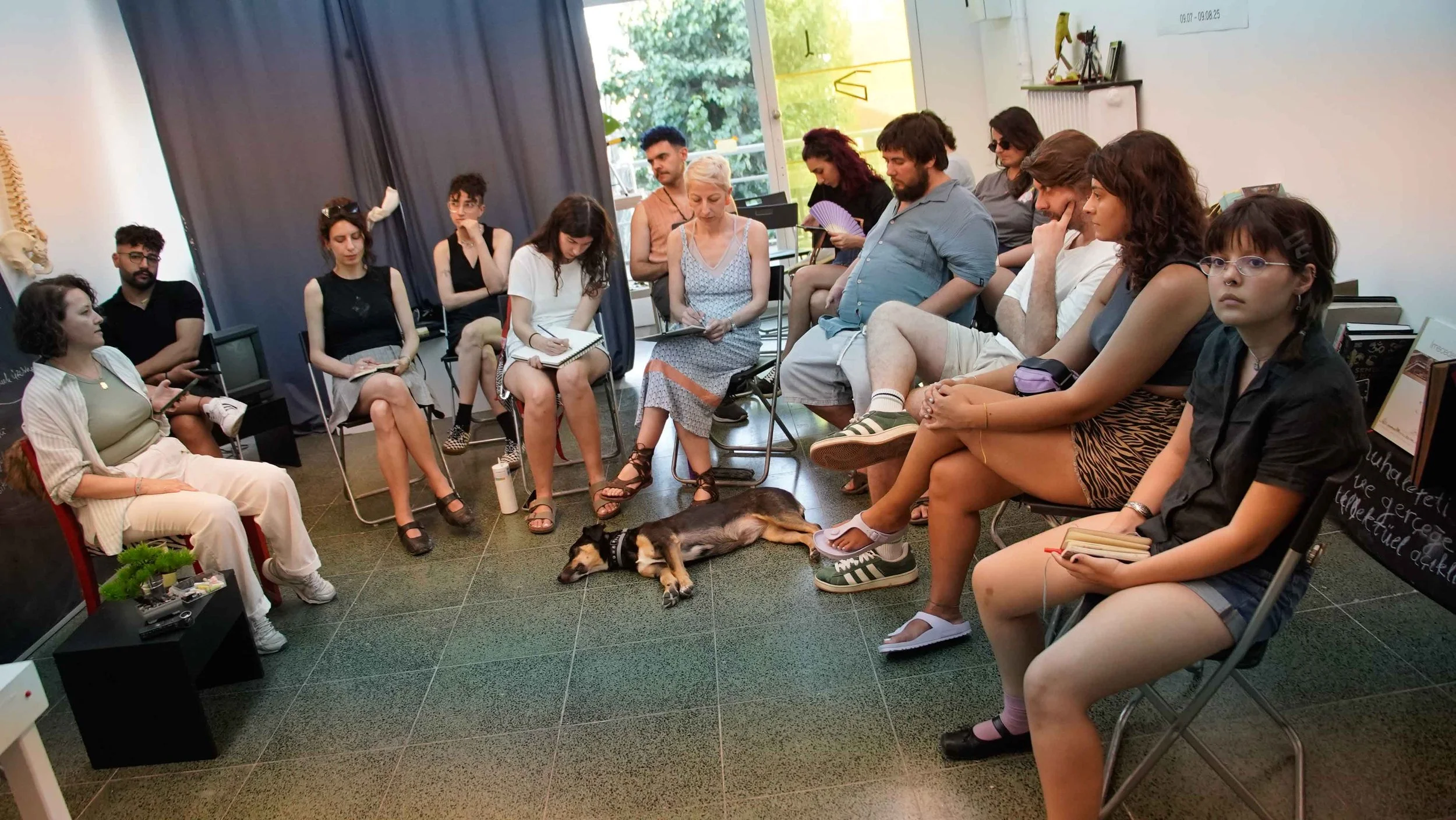
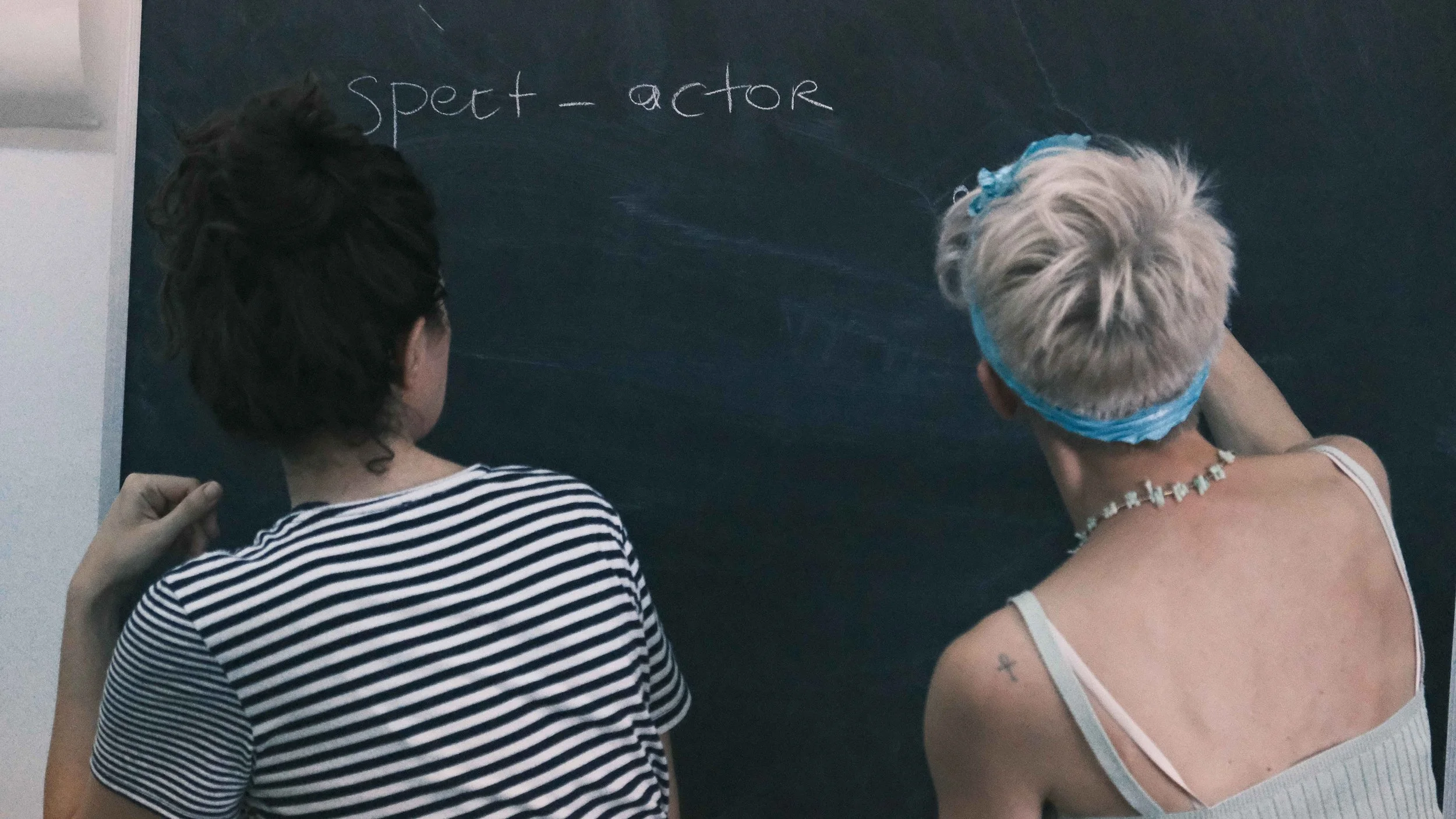
The areas of study evolved around different themes facilitated by the collective’s members, while remaining open to expansion through both interaction with participants who joined through an open call, and talks and lecture-performances by invited speakers from various disciplines. Together with contributions from diverse disciplines, the collective focused on concepts drawn from philosophy, law, technology, ecology, and media studies, exploring how these notions can be expressed and reimagined through artistic forms such as space, movement, and the body. The project culminated with a series of lecture-performances and an accompanying exhibition: CereyanFest.
The talks and lecture-performances are archived in HemCereyan’s YouTube channel.
Followed by the project, HemCereyan's speculative diary about the project is published under the name Farazi Günlük in issue 206 of Sanat Dünyamız, the quarterly magazine. This issue titled “Unutmaya Sevdiklerinden Başla: Sanat ve Öğrenim” concentrates on various models of art education, centering on the experience of learning and unlearning. Moreover HemCereyan continued to give performative talks on the project, one of them was held at ZihniHan during the 18th Istanbul Biennial and another talk was broadcasted as part of Bağımsızlar program at Apaçık Radyo.
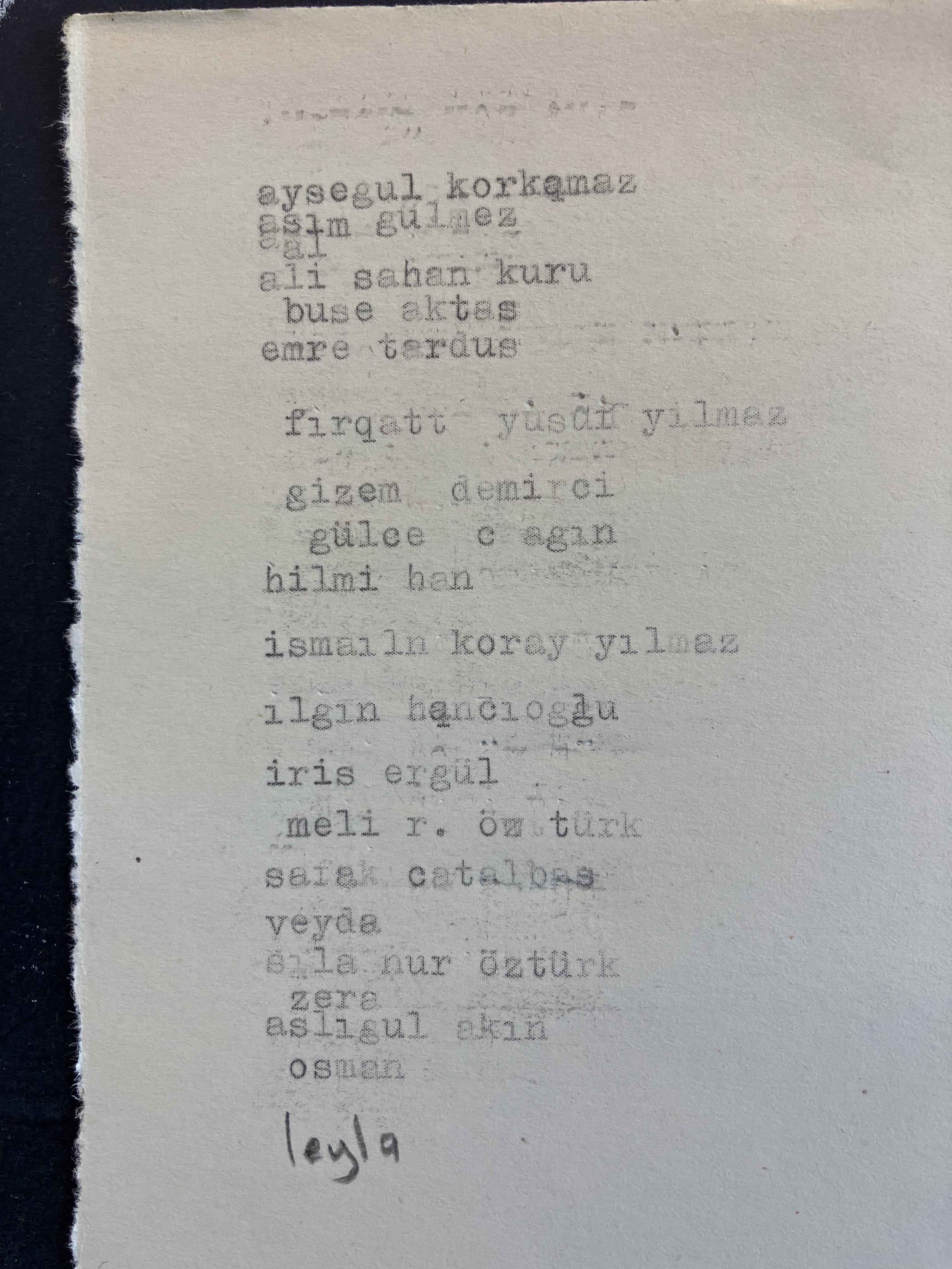
Participants who responded to the open call are as follows (alphabetically): Asım Gülmez, Aslıgül Akın, Ayşegül Korkmaz, Emre Tarduş, Gizem Demirci, Gülce Çağın, Hemiş, Hilmihan Tunca, İsmail Koray Yılmaz, Leyla, Meli R Öztürk, Osman, Sıla Nur Öztürk, Veyda, Zera Varlı
The invited speakers are as follows (chronologically): İnci Eviner, Nancy Atakan, Lüthier Ekrem Uğurlu, Sibel Yardımcı, Fulya Peker, Barış Arman, Eylül Alnıaçık, Ezgi Altınöz, Dijan Özkurt, Mine Yıldırım, Sena Cucumak, Deniz Gündoğan İbrişim, Evrim Kavcar, Zeynep Sayın, Ezgi Hamzaçebi ile Merve Mehmet, Eda Yiğit ile Serdar Soydan
Project Proposal:
We envision an experimental project; a heterotopian school named in-situ-tute. This school will dynamically weave itself into İMÇ’s architecture and sociopolitical ecologies through artistic research methodologies. We imagine a network of in-situ educational facilities within İMÇ’s diverse sectors, including: a lecture hall, a library, a laboratory, and a gym. These facilities are not imagined as physical spaces but as conceptual and dynamic structures for gathering. For this project, İMÇ will be our space of operation, and its actors (human and non-human) will be our teachers, our students, our peers, and our companions in making, in unlearning, and in re-imagining knowledge. While traditional and contemporary education systems struggle to cope with today’s information economies, we will practice horizontal and liberating modes of creating and communicating knowledge.
By situating our school in İMÇ, a space built during Turkey’s ambitious modernizing process in the 1960s, yet now functioning as a layered and unruly ecosystem of informal economies, diasporic networks, and material know-how, we aim to stage an epistemic detour. We will explore and activate historical resources about the market from the İMÇ Administration, and especially the archive of 5533. In reclaiming İMÇ as a school, we embrace what bell hooks described as “the most radical space of possibility”: a site where learning is inseparable from transformation, and knowledge emerges not from authority, but from relationality, unlearning, and collective practice. We envision settling into İMÇ by thinking of it as a space/organism that allows for unexpected transformations. In this project, we plan to form production partnerships with İMÇ residents. We will establish different kinds of kinships and become part of its daily life, avoiding the exoticization of its inhabitants. In pursuit of a more equitable, inclusive, and liberating world, we are establishing this project as a self-sustaining method of shared resistance.
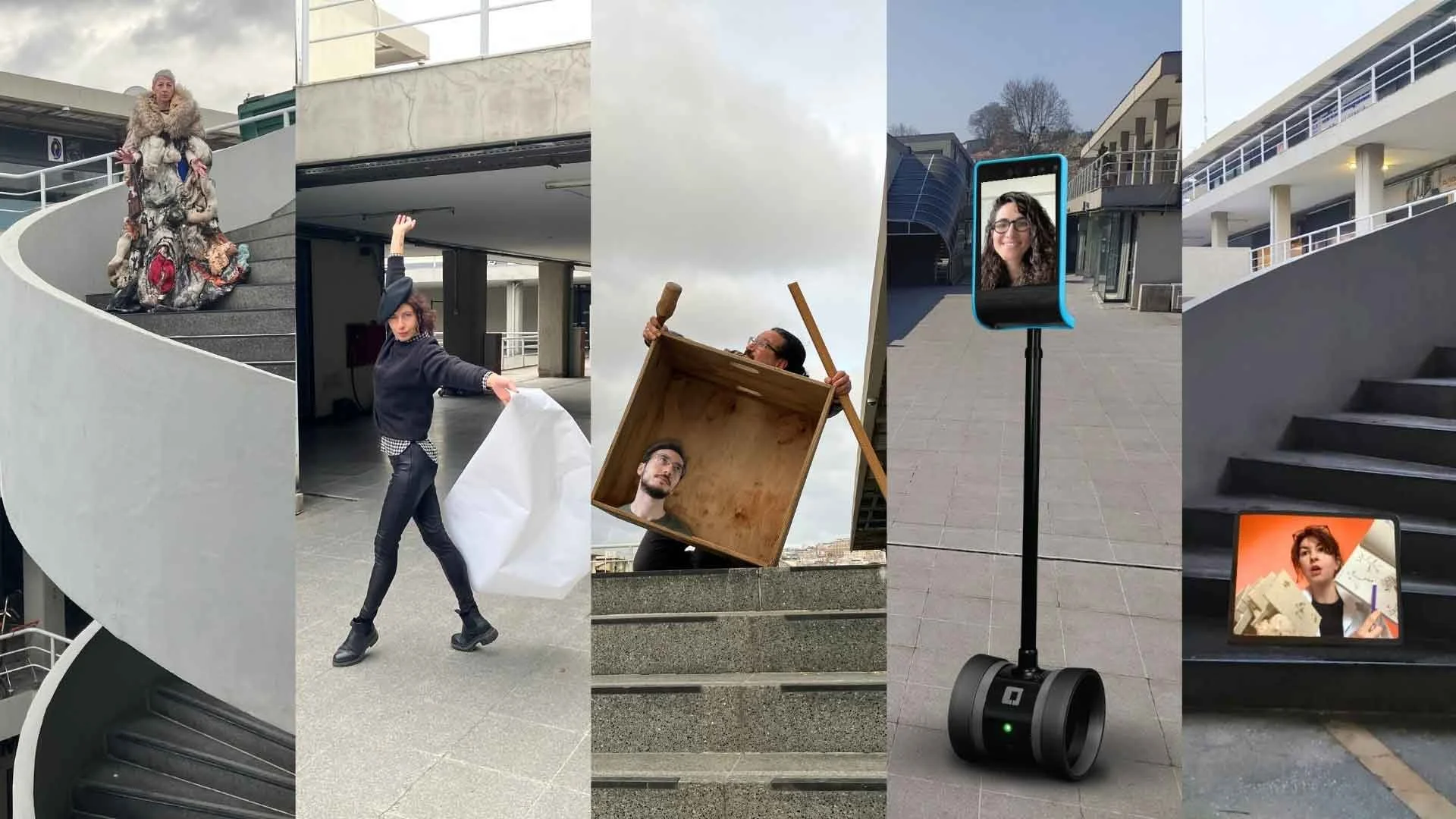
The in-situ-tute will operate through four educational facilities which will offer diverse perspectives into İMÇ’s socio-material entanglements. These facilities, conceived and led by members of the collective, will bring together a hybrid group of participants: students, invited contributors with relevant expertise or artistic practices, and individuals selected through an open call. This mixed model allows for both carefully curated collaboration and spontaneous, site-responsive engagements. Participants will be involved in research, co-production, and public programming throughout the project.
The facilities; the gym, the laboratory, the library, and the lecture hall are as follows:
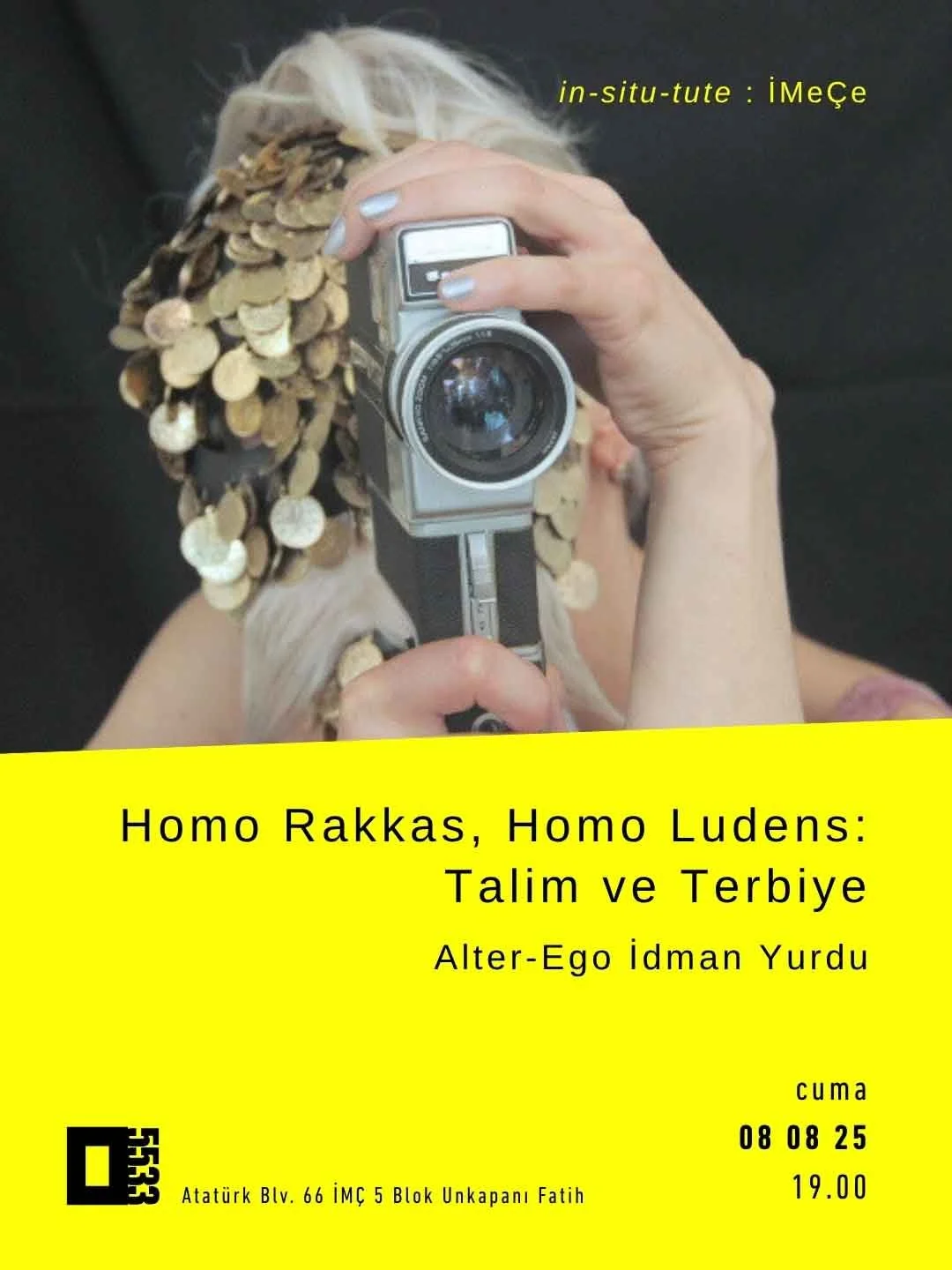
Alter-Ego Gymnasium (Alter-Ego İdman Yurdu)
Facilitator: İris Ergül
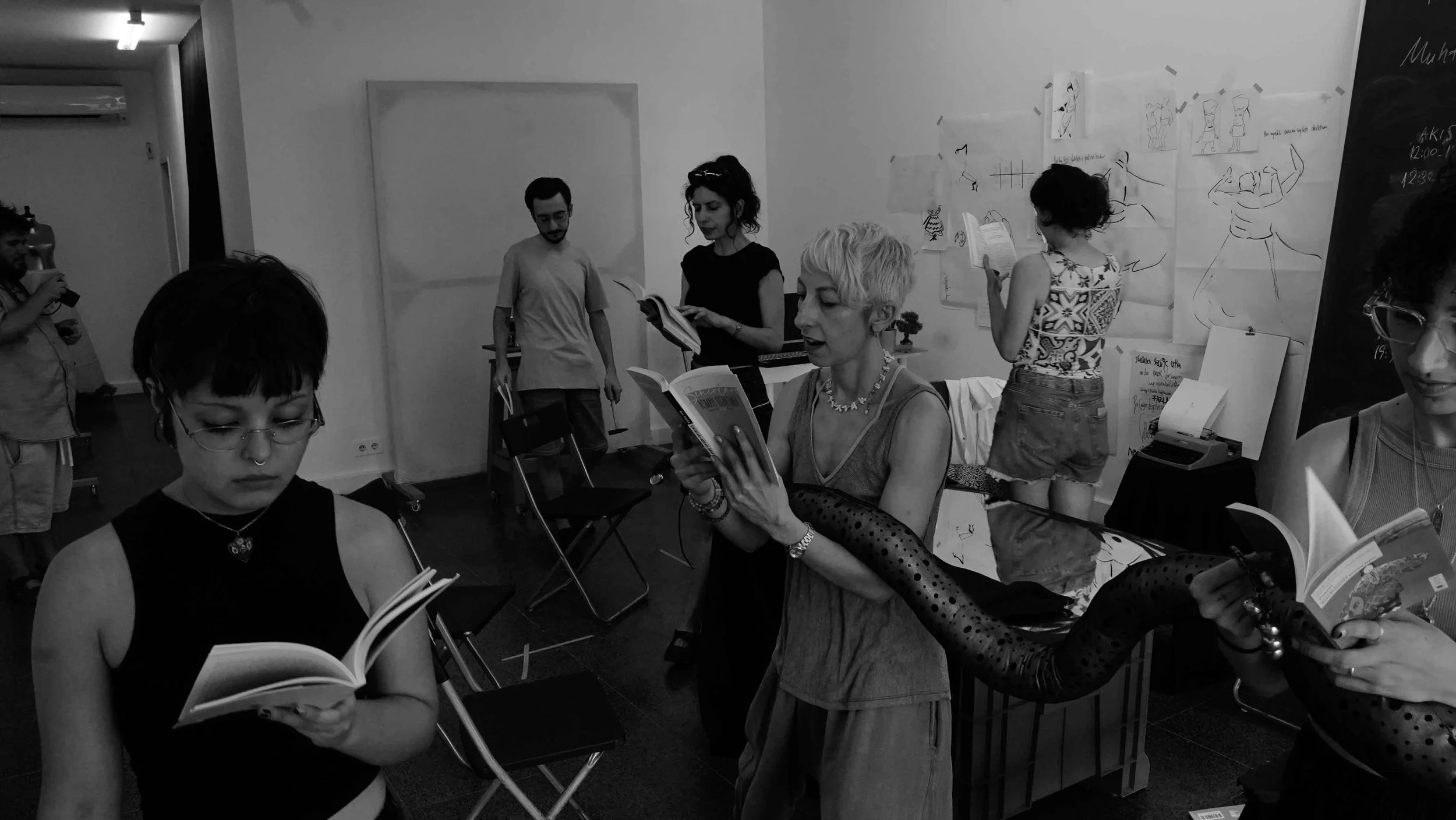
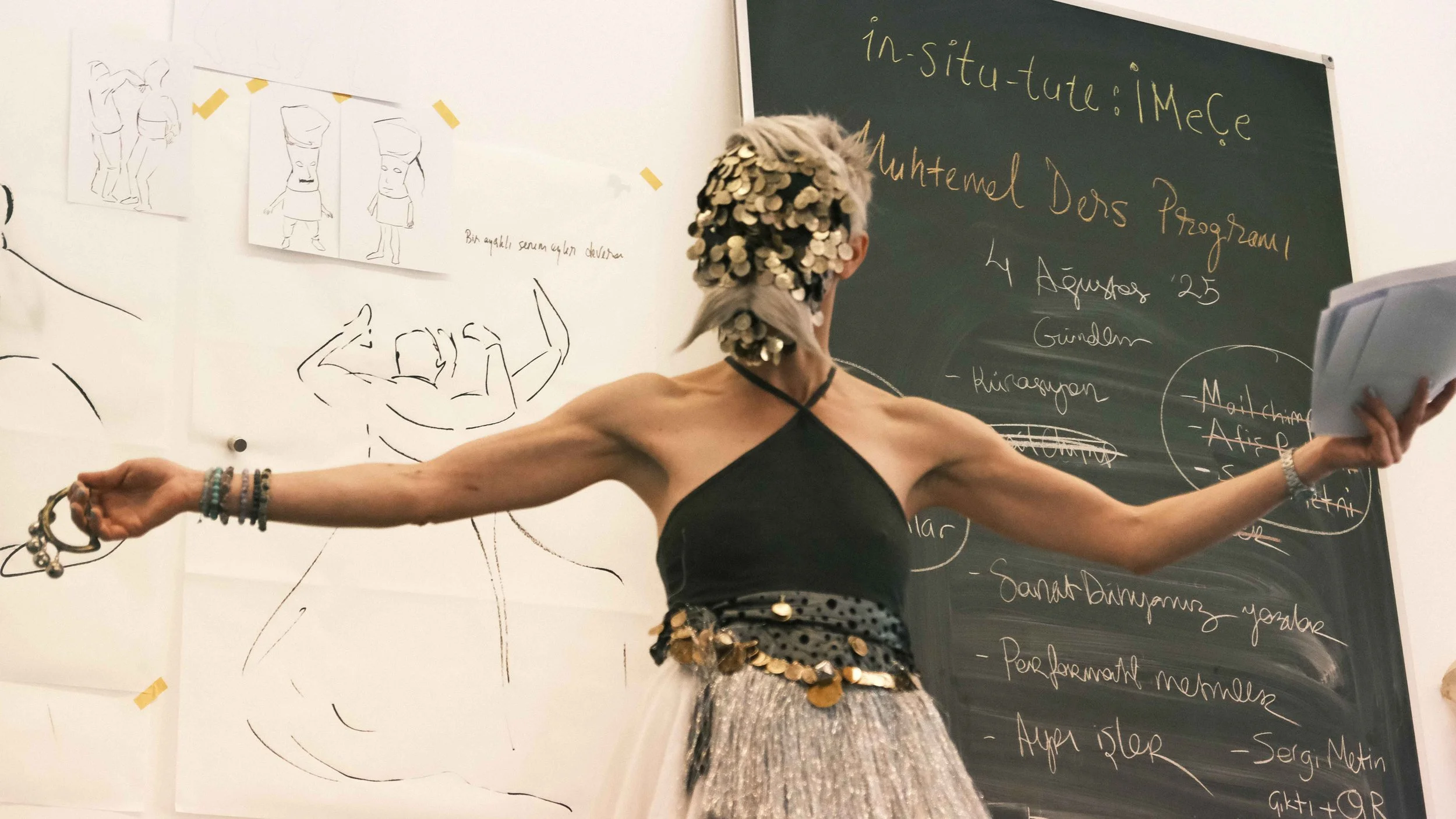
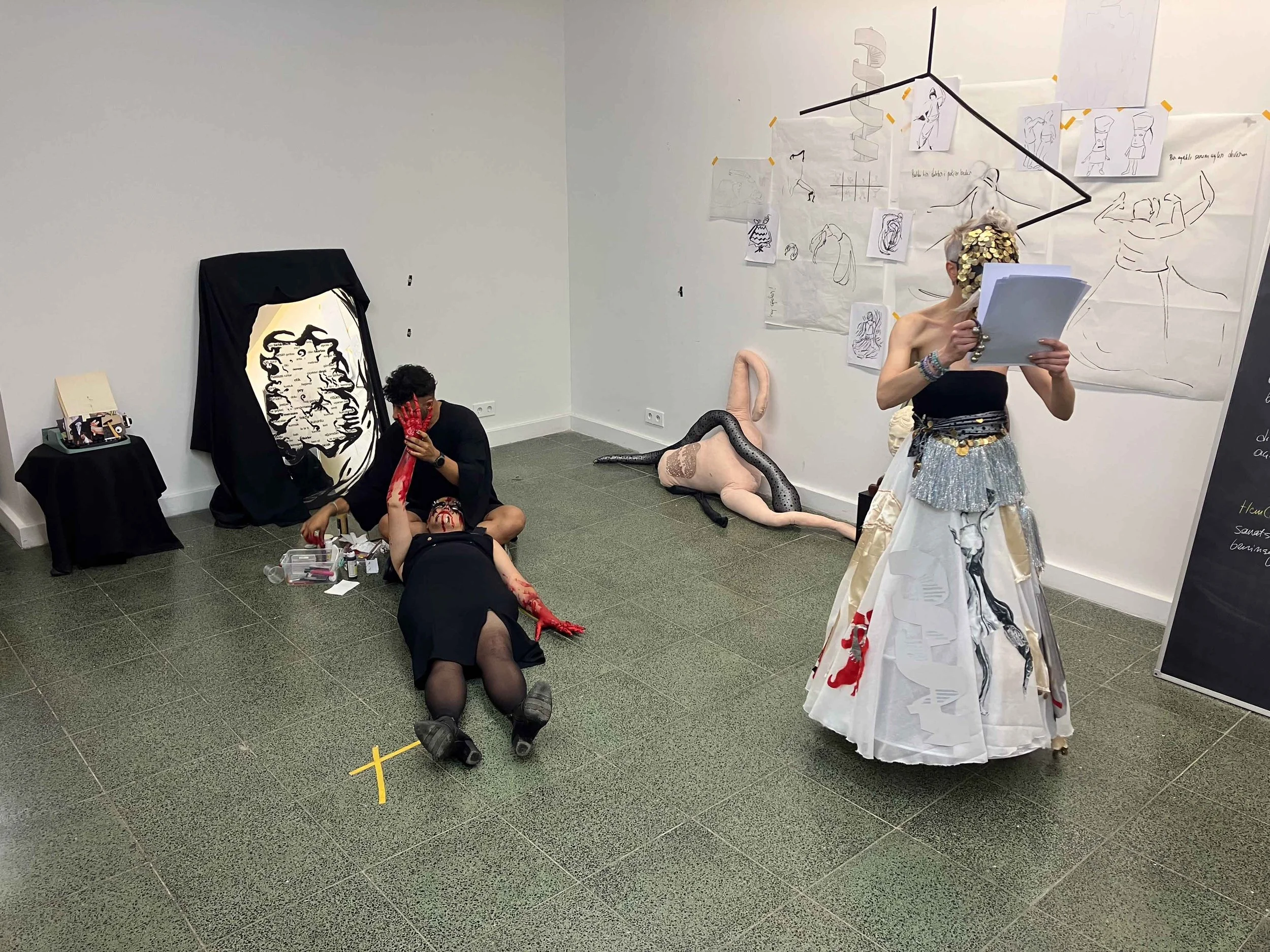
Alter-Ego Gymnasium serves as the physical education department of in-situ-tute and acts as a feminist counter-space within the male-dominated, homosocial structure of the IMÇ complex. It examines hegemonic masculinity in public space, opening feminist imaginaries for how bodies think, act, and relate.
This department offers an experimental learning environment grounded in embodied thinking and physical transformation. Participants engage in performative readings and discussions using shifting voices, body extensions, wearable sculptures, and improvisation. Drawing inspiration from traditions like Aşuk ile Maşuk and gender-bending dance forms like köçek, the Gymnasium becomes a speculative stage where roles are continually undone, rehearsed, and reimagined.
Over time, these practices will shape a Body Atlas—a visual and tactile archive of texts, drawings, collages, and fabric-based mappings. Rather than a fixed taxonomy, this Atlas reflects an evolving, porous record of collective gestures, figures, and choreographies.
"Homo Rakkas, Homo Ludens: Talim ve Terbiye" Presentation-Performance Excerpt
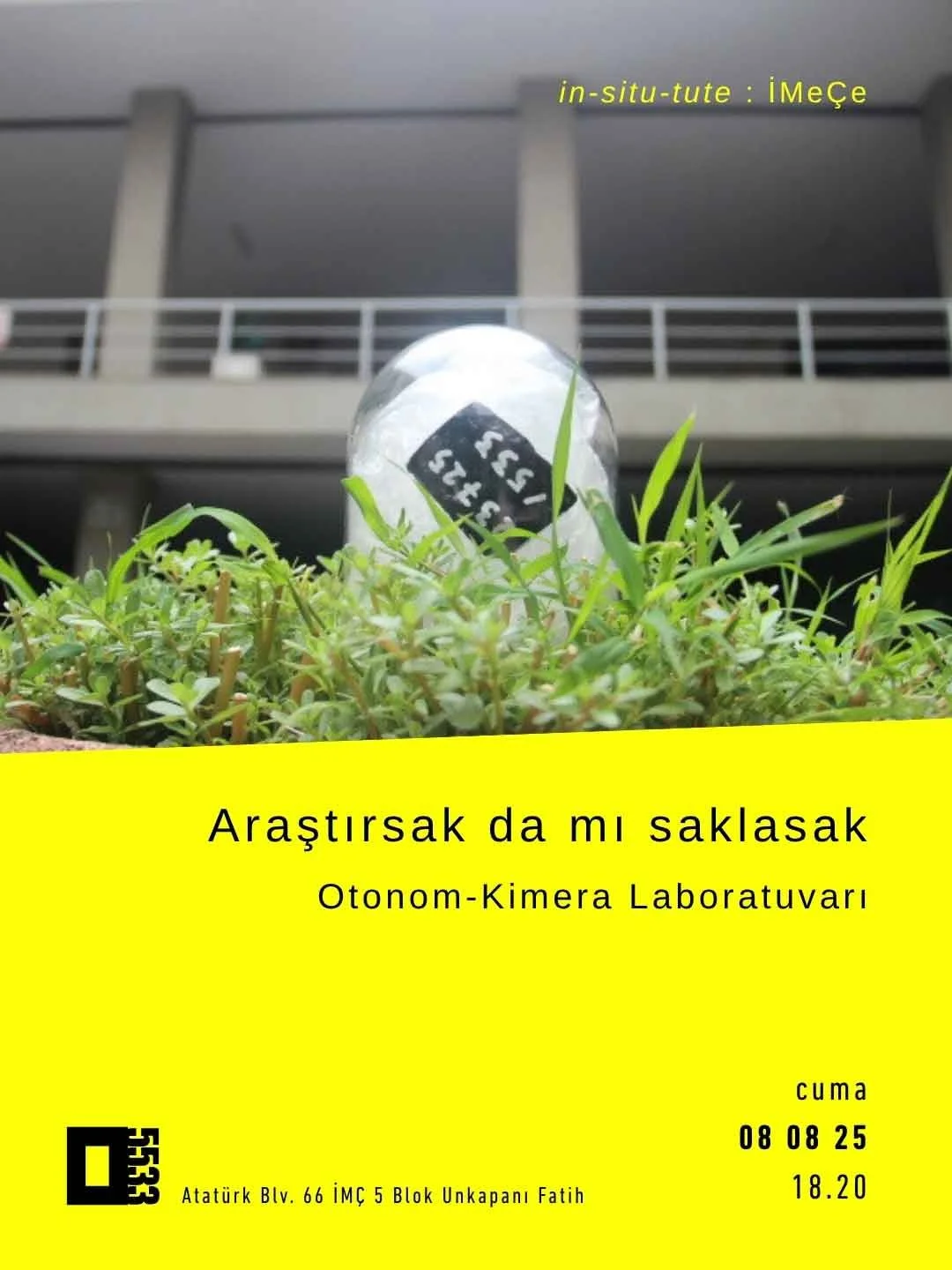
Autonomous-Chimera Laboratory (Otonom-Kimera Laboratuvarı)
Facilitators: Buse Aktaş & Ilgın Hancıoğlu
Autonomous-Chimera Laboratory is the ecological observation, conservation, experimentation, and creation hub of the in-situ-tute. Chimeras have different meanings in mythology, biology, genetics, and linguistics. The Laboratory explores the endemic chimeras inherent to İMÇ, including but not limited to artisans, shopkeepers, bugs, rats, dogs, industrial machinery, the architecture of the market, and not-yet-defined species.
5533 will serve as our active laboratory—a site where chimeras are collected, created, and their ancestors and descendants speculated and reimagined. Endemic objects such as cassette tapes, carpets, and drapery will be cross-stitched with alien materials to create robotic organisms mimicking native behaviors. We will study these chimeras, which each have their own behaviors and limitations, with artistically modified versions of scientific methods. This study not only allows us to witness the co-evolution of these species but also recreates the marketplace as the intersected host of numerous umwelts. The laboratory’s experimental findings, models, and analyses will culminate in a video mockumentary.
"Bir Eko Ton İMÇ" Mockumentary
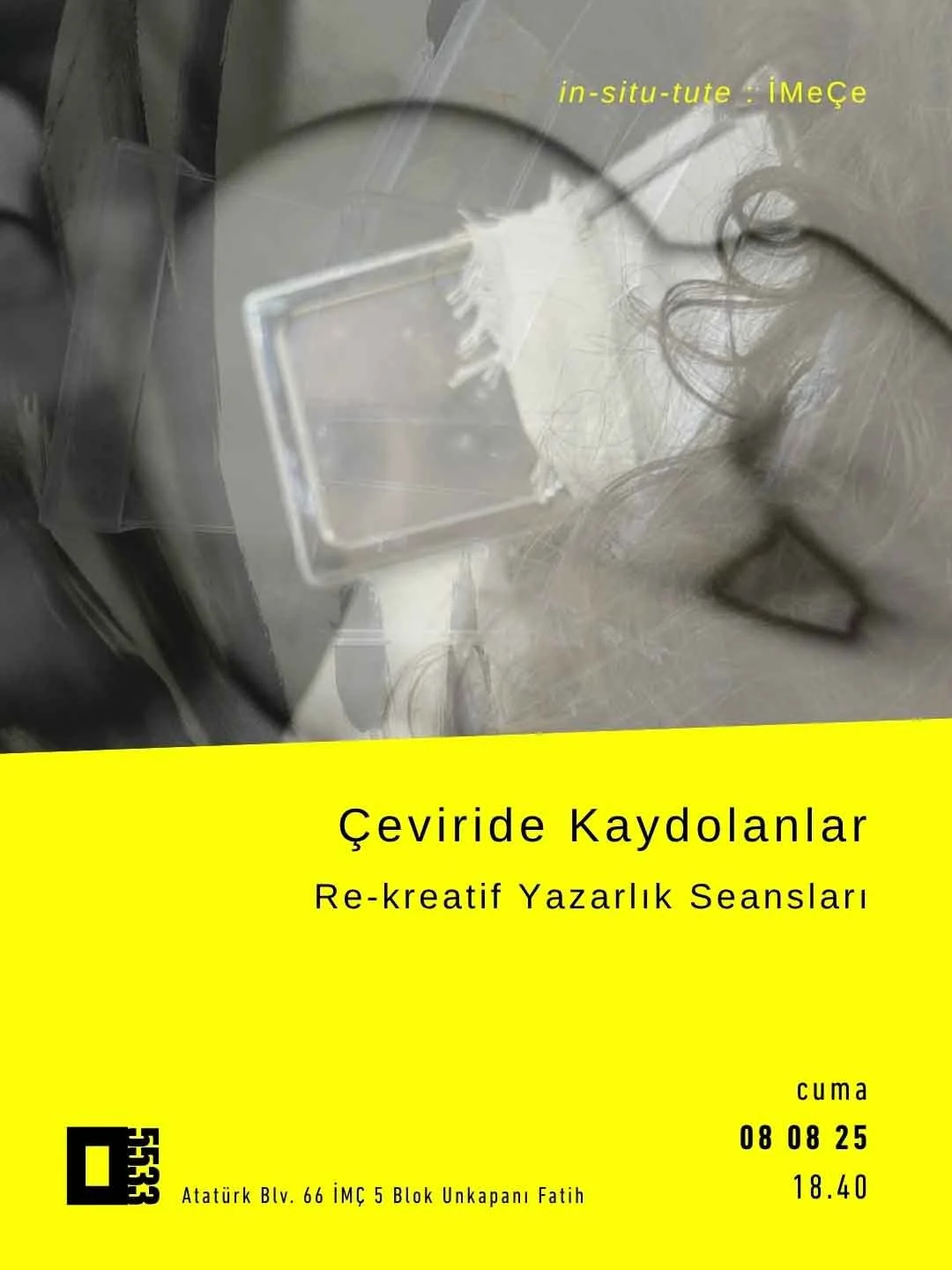
Re-creative Writing Sessions (Re-kreatif Yazarlık Seansları)
Facilitator: Şafak Çatalbaş
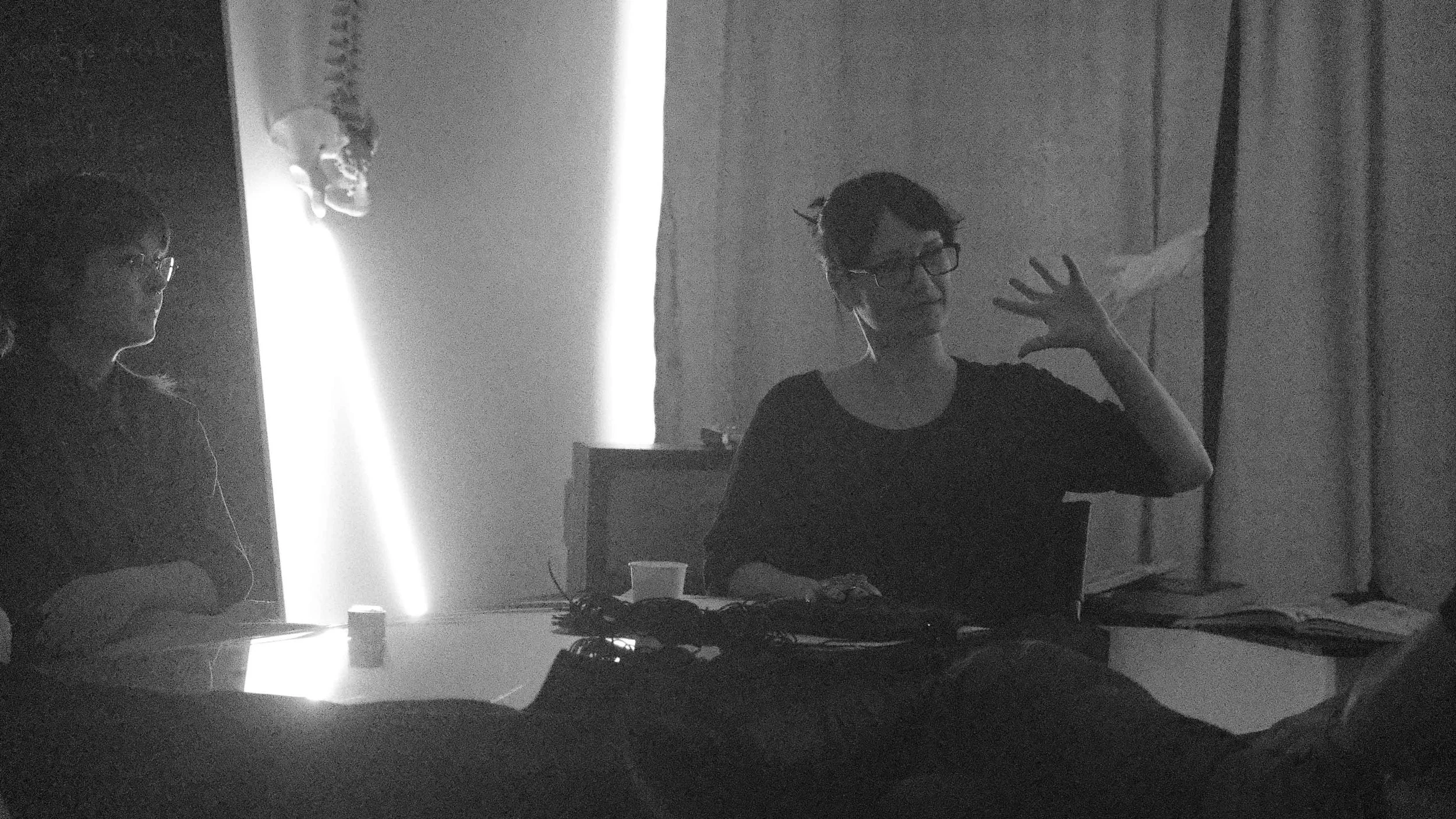
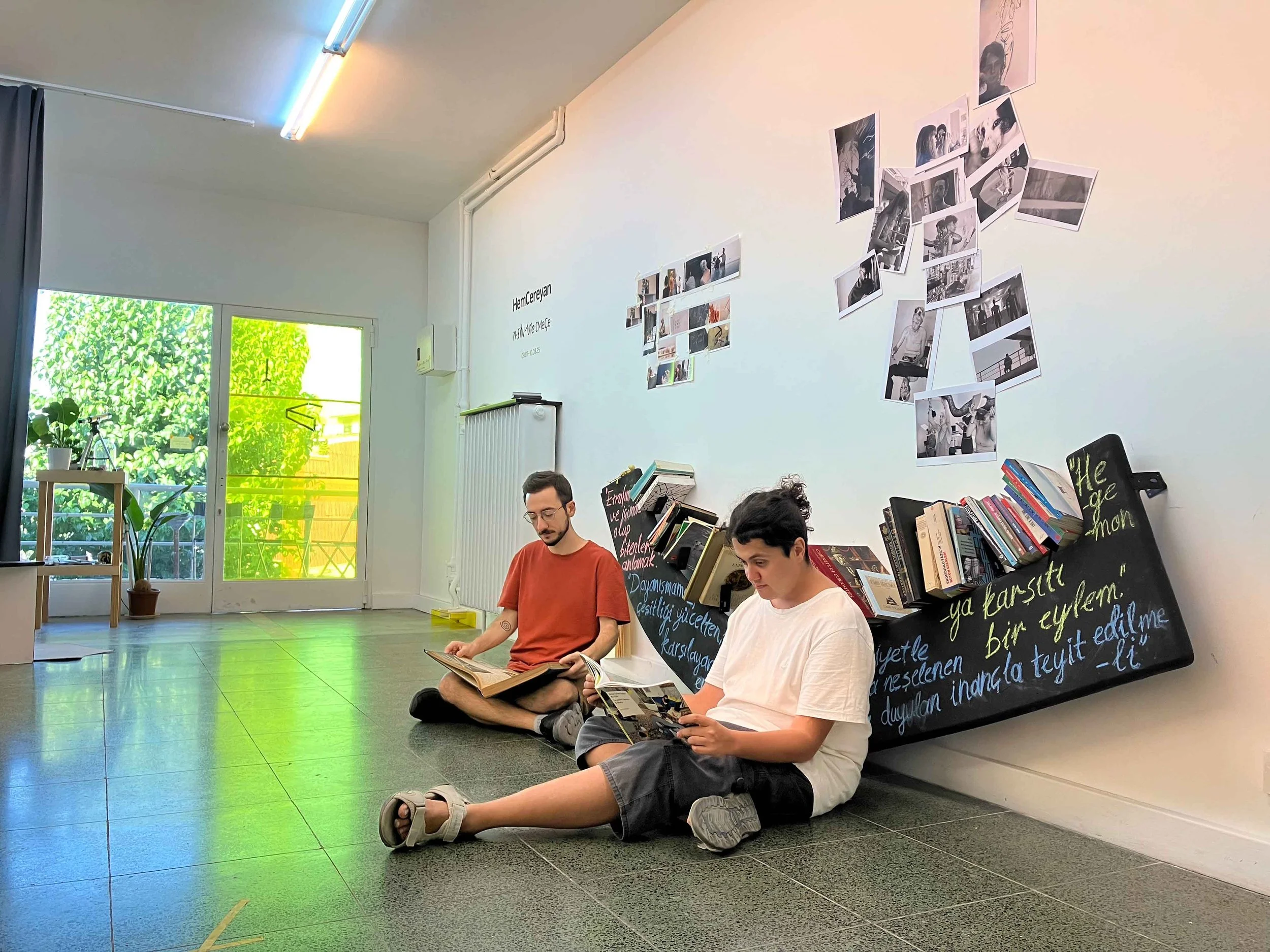
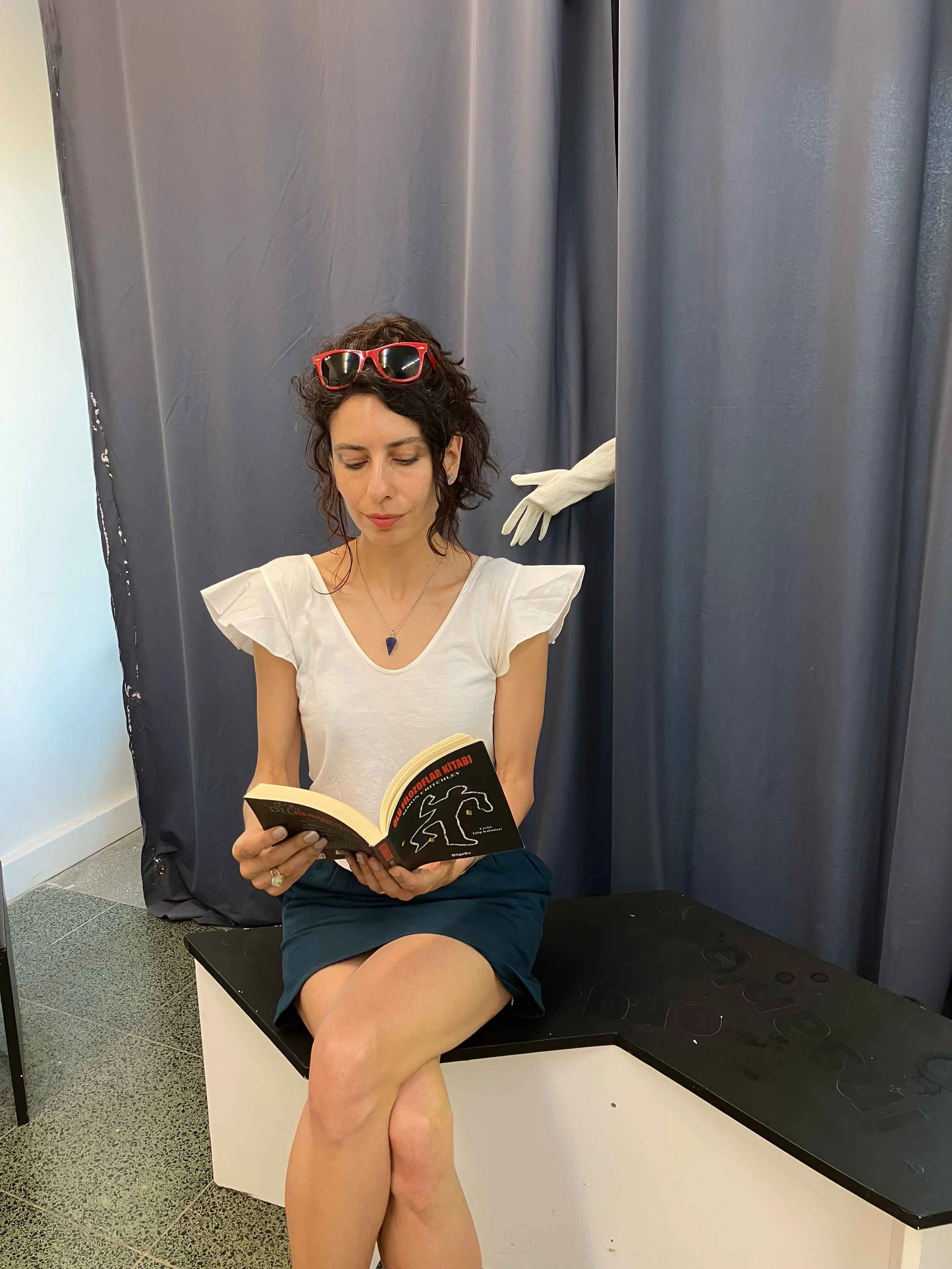
As the speculative library department of the in-situ-tute, “Re-creative Writing Sessions” are performative gatherings around a séance table where the spirits of deceased thinkers are summoned. Controversial, discredited or overlooked texts—those that no longer align with today's ethical criteria—are revisited and rewritten. Marginalized or censored writers also find a voice in these trans-temporal sessions, held privately but live-streamed for broader participation.
These sessions culminate in experimental audiobooks inspired by the record shops that are full of endangered media (cassette tapes, VHS, DVD, etc.) at İMÇ. Also, there will be re-enactments based on photographic documentation of ectoplasmic séances popular in the early 1900s. Materials like paper, typewriters, cassette tapes, sewing machines, and textiles—sourced from İMÇ shops—serve as the materialization of the spirit forms in this haunted rewriting process.
The presence of the graves around İMÇ, which were revealed during the construction and caused revisions and interruptions of the project in the late 1950s, will accompany our sessions. These sessions open a portal across diverse realities, geographies, and times—co-authoring evolving ethical standards for future reinterpretation.
"Çeviride Kaydolanlar" Re-creative Collective Text for Lecture-Performance
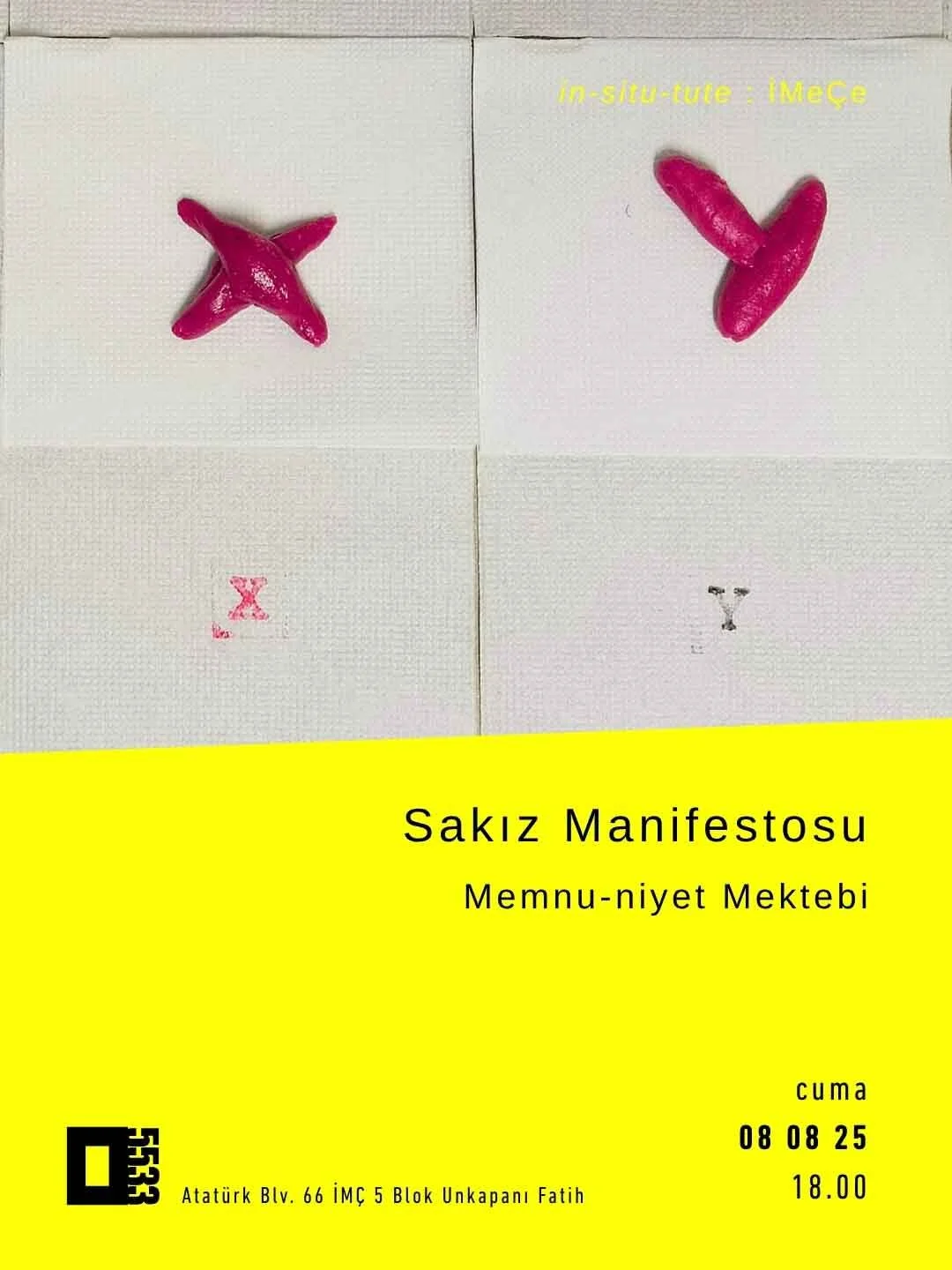
Lecture Hall of Satis-fiction (Memnu-niyet Mektebi)
Facilitator: Ali Şahan Kuru & Fırat Yusuf Yılmaz
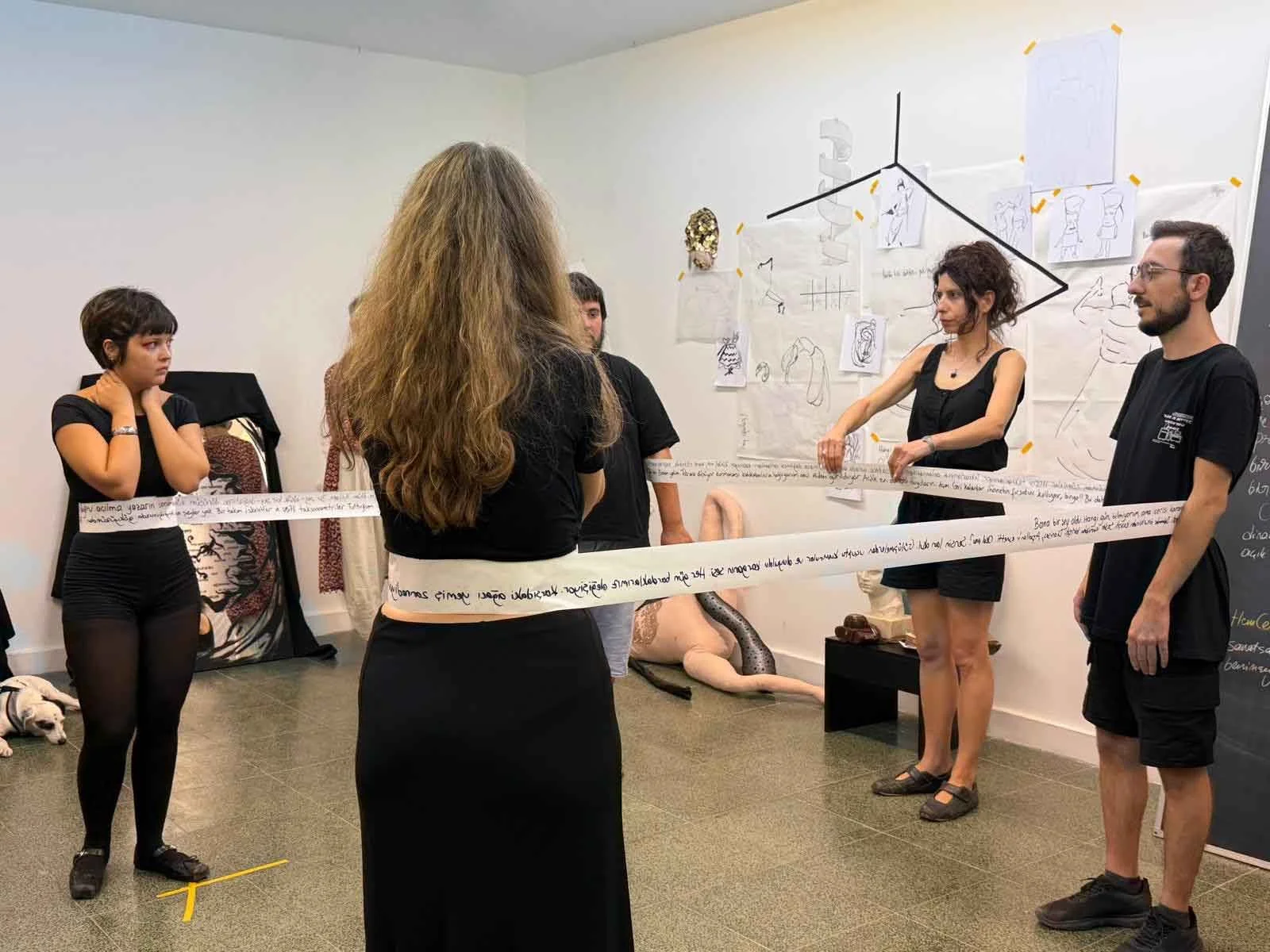
The Lecture Hall of Satis-fiction is a nomadic and dynamic classroom unfolding across the terraces and balconies of İMÇ; the architecture of İMÇ becomes an active participant. Rooted in the idea of intellectual emancipation, the Lecture Hall proposes a teacher who does not impose knowledge, but instead initiates a process where learning becomes a shared act of translation, attention, and equality. A faltering teacher moves back and forth along a bridge, attempting to teach while performing real-time translations—generating a speculative, ever-shifting encyclopedia. The bridge stands as a metaphor where knowledge moves not linearly, but in cycles of exchange.
Students, dispersed throughout the site, respond by writing manifestos inspired by these fluid ideas. As they read them aloud across the bridge, meanings blend, distort, and evolve through misinterpretation. Ideas emerge through movement, gesture, and sound, dissolving the boundary between theory and action. The class culminates in a series of recorded performance-manifestos—living documents of a shared, ever-evolving learning process.
HemCereyan, as the Pseudo-Academic Staff of in-situ-tute
Buse Aktaş
Ilgın Hancıoğlu
İris Ergül
Şafak Çatalbaş
Ali Şahan Kuru
Fırat Yusuf Yılmaz