

Fosiller, Adi Taşlar, Değerli Taşlar
Merey Şenocak
10 Şubat — 2 Mart 2024
Sergi fotoğrafları: Emirkan Cörüt
Kitapçık tasarımı: İlayda Tunca
Poster tasarımı ve kitapçık illüstrasyonları: Ali Mert Değirmencioğlu
Metin: Ekin Tümer
Basın bülteni
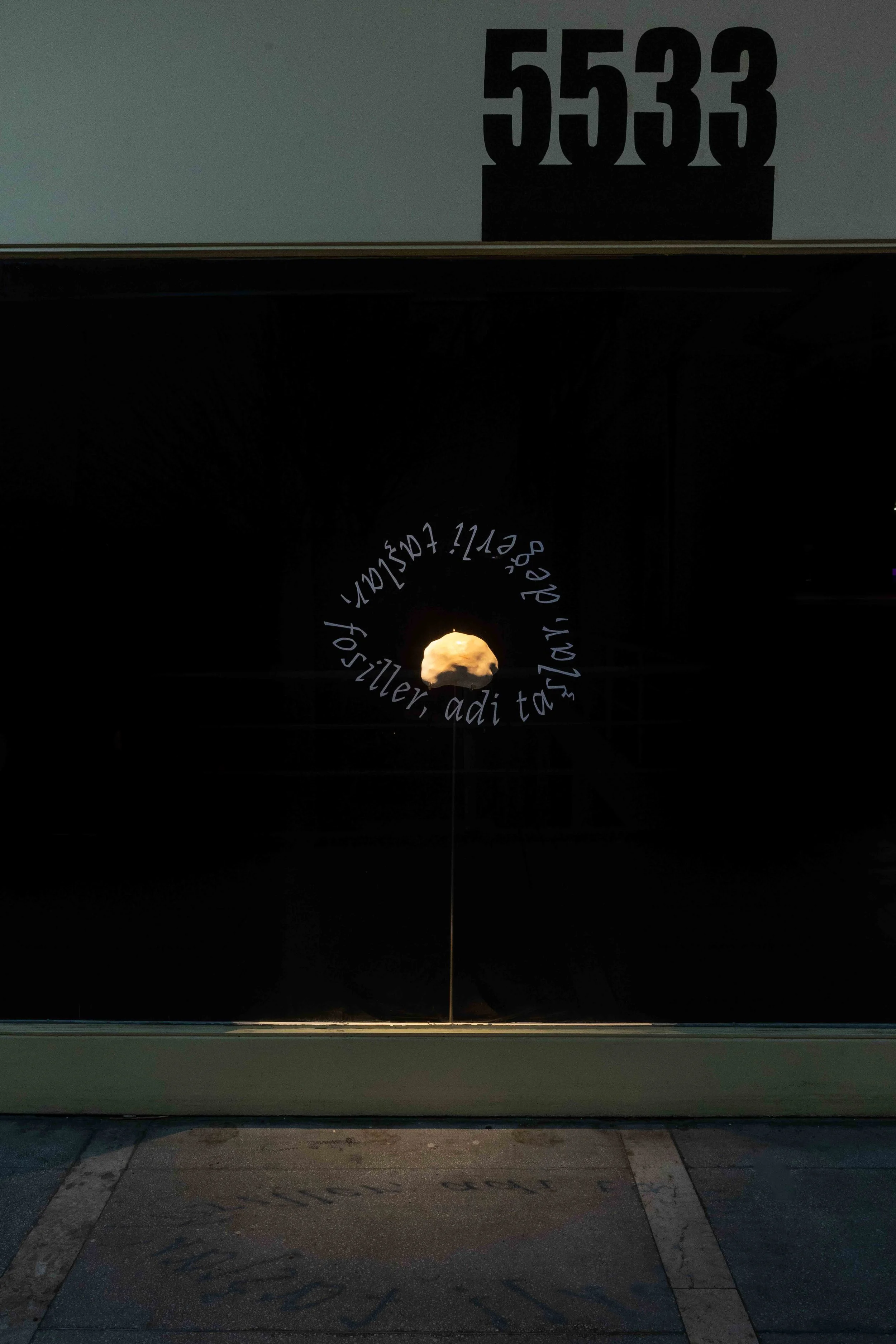
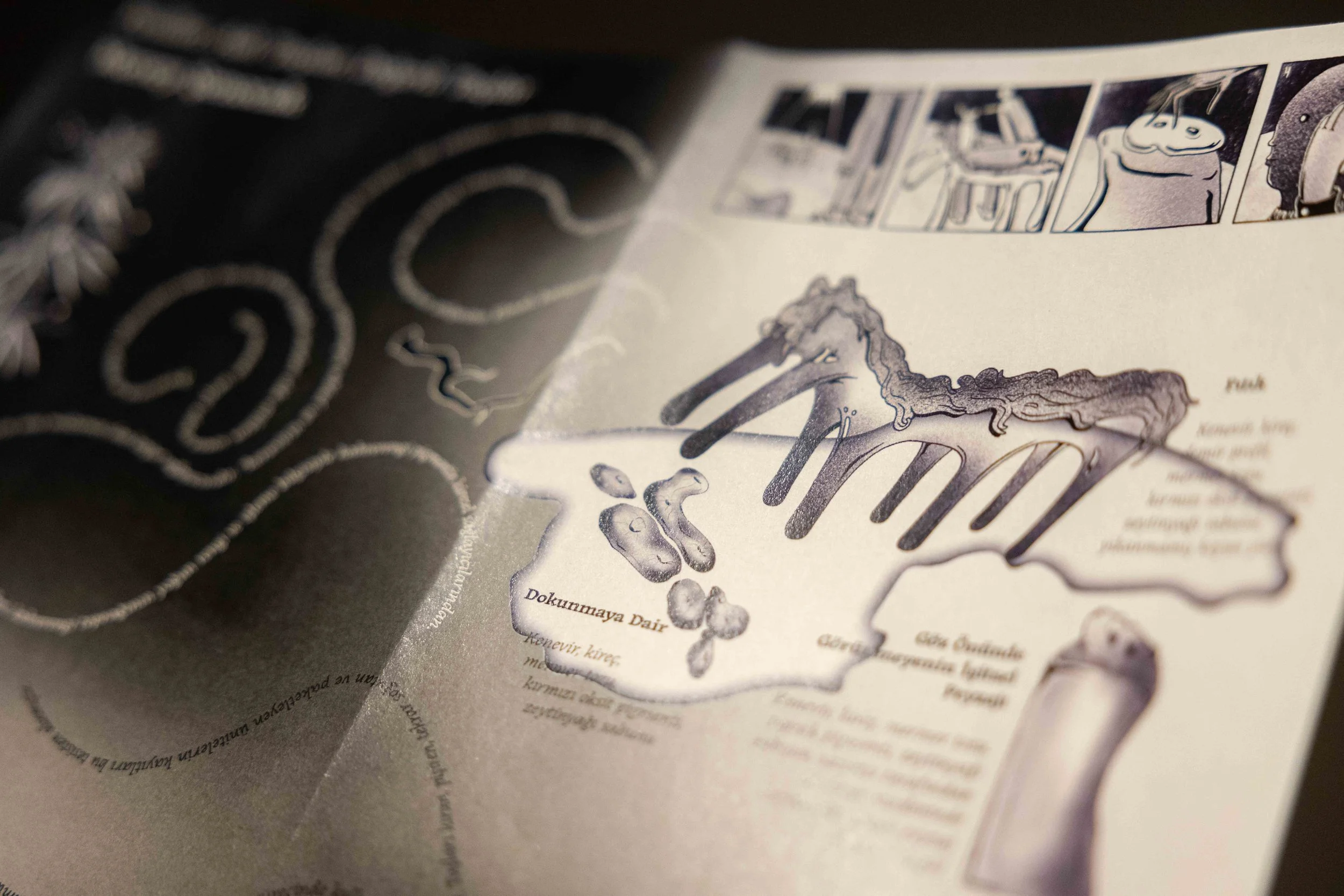
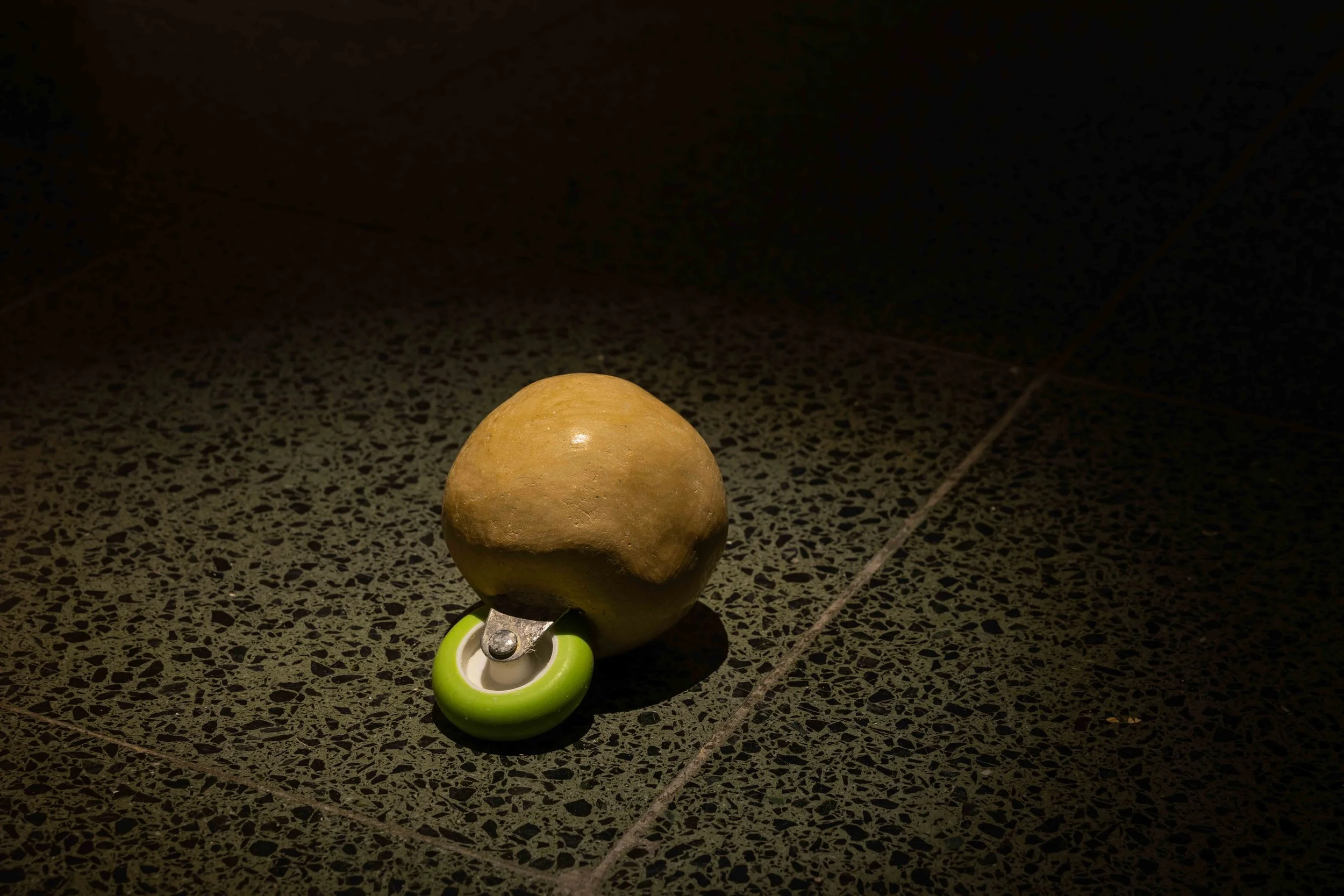
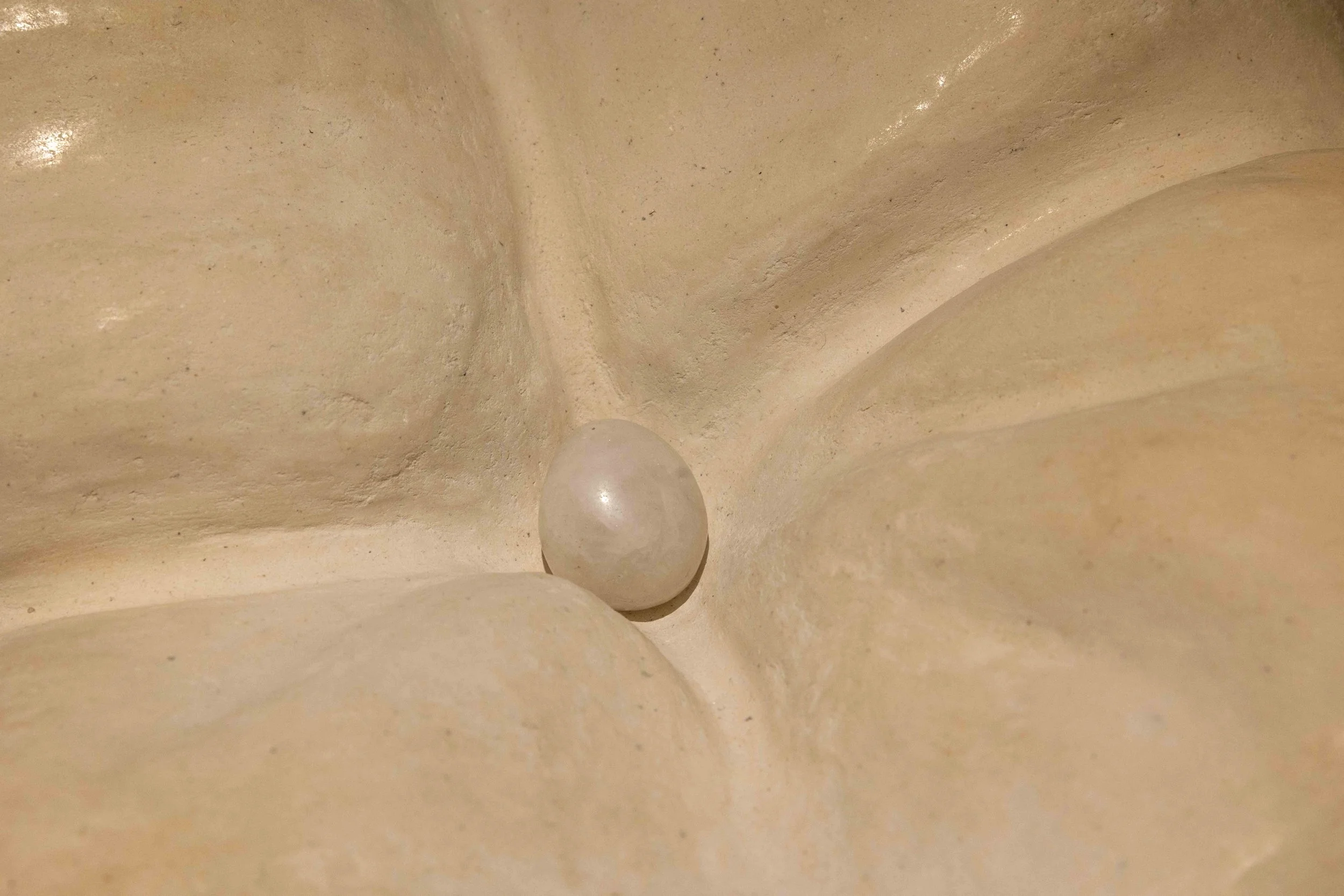
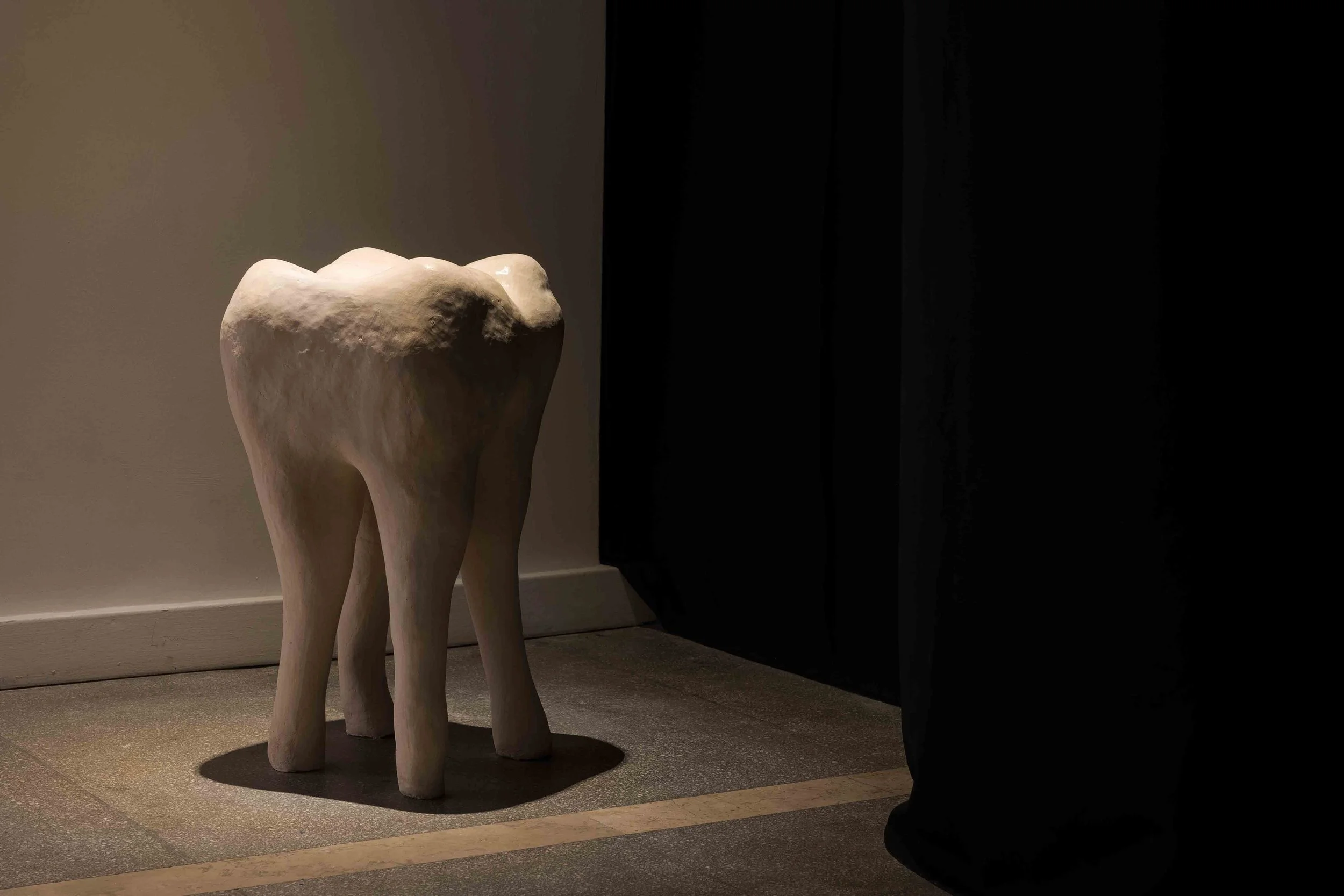
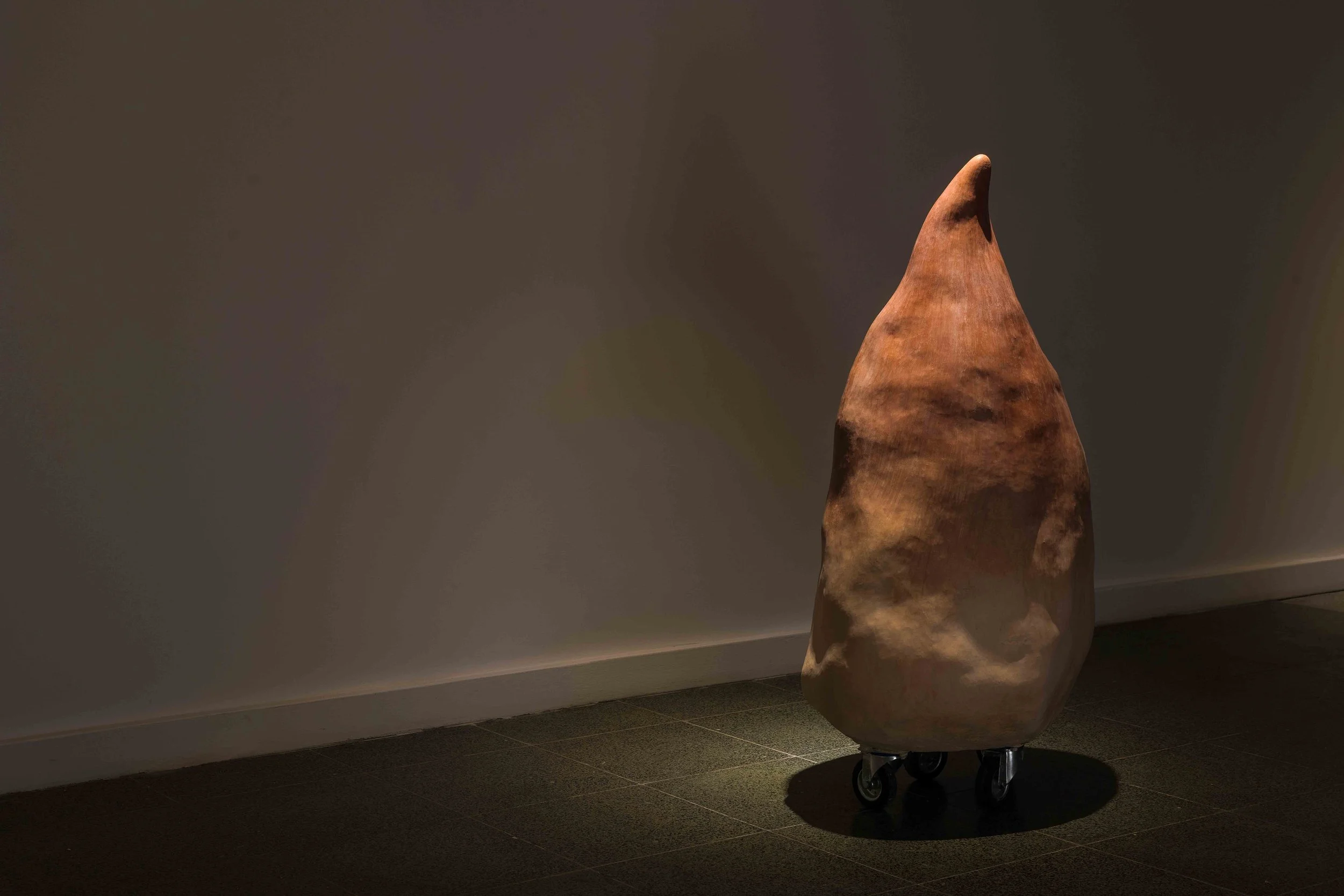
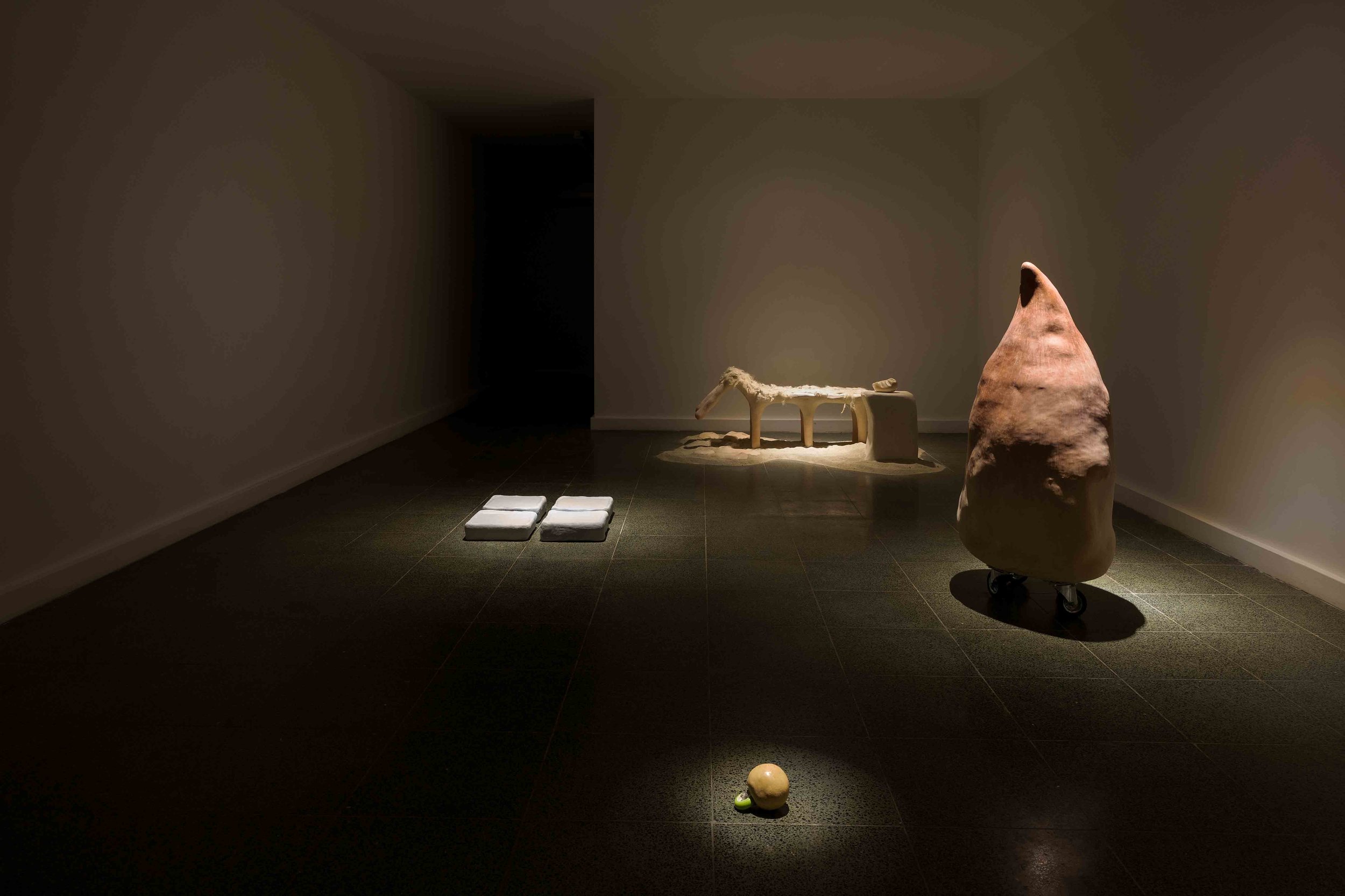
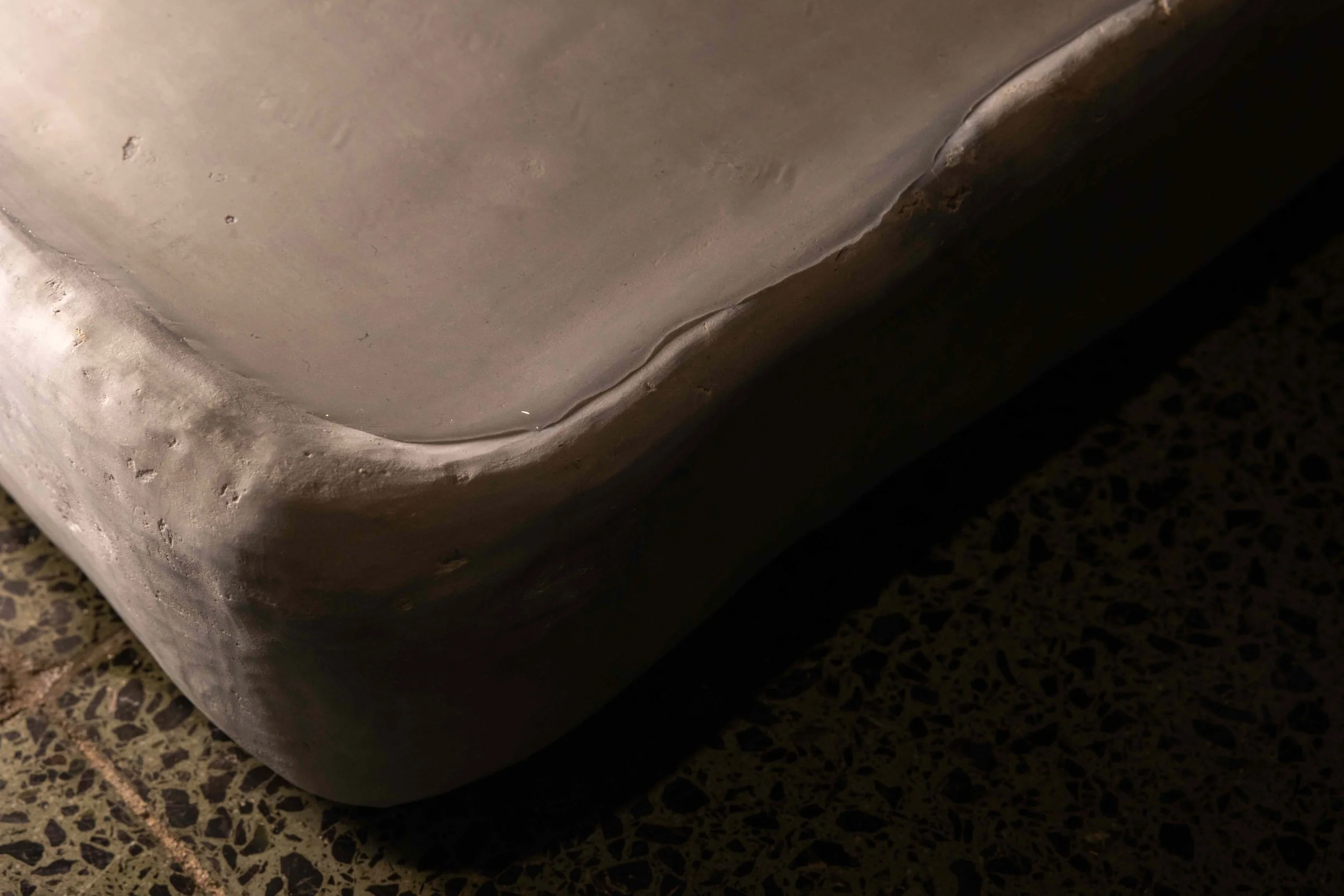
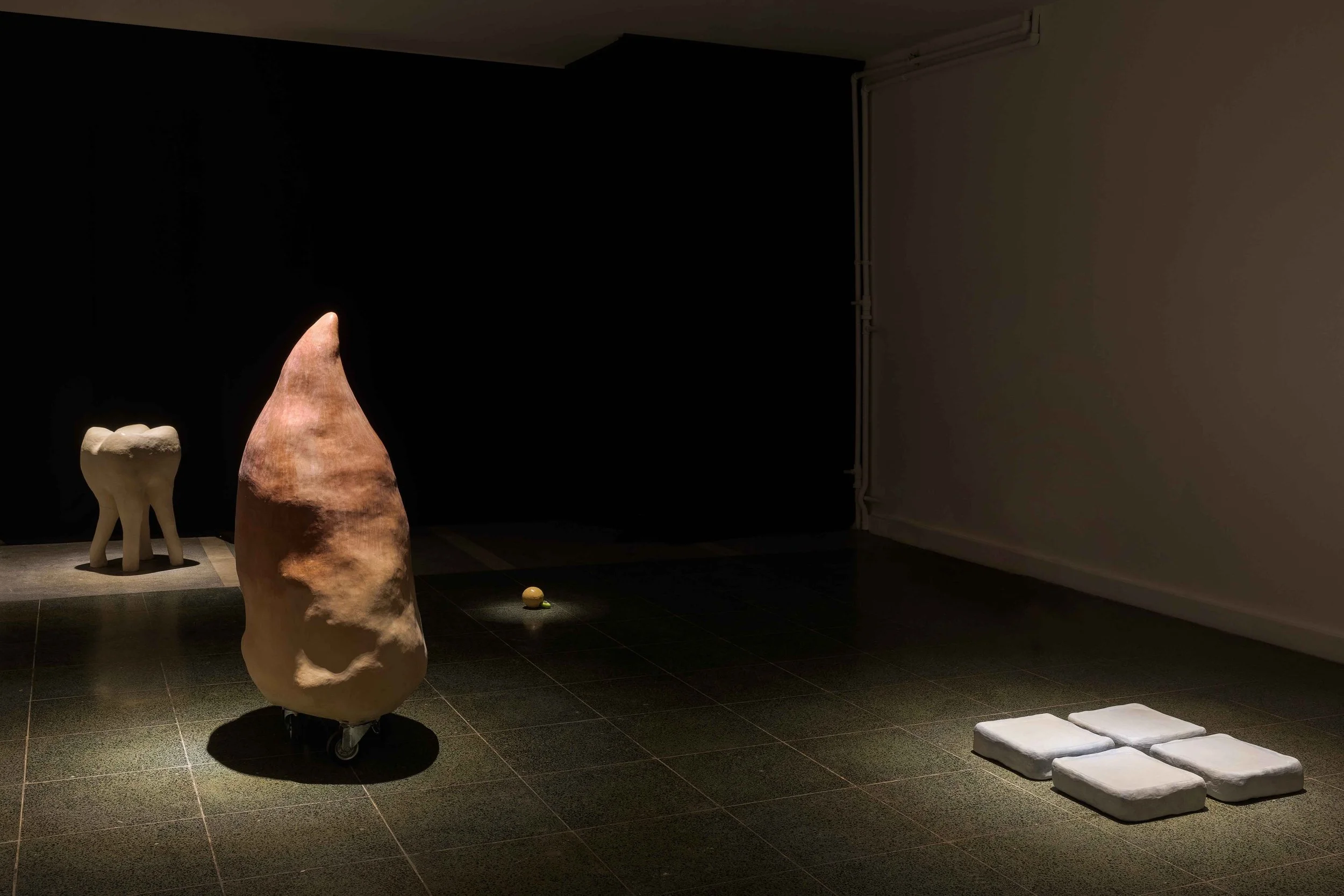
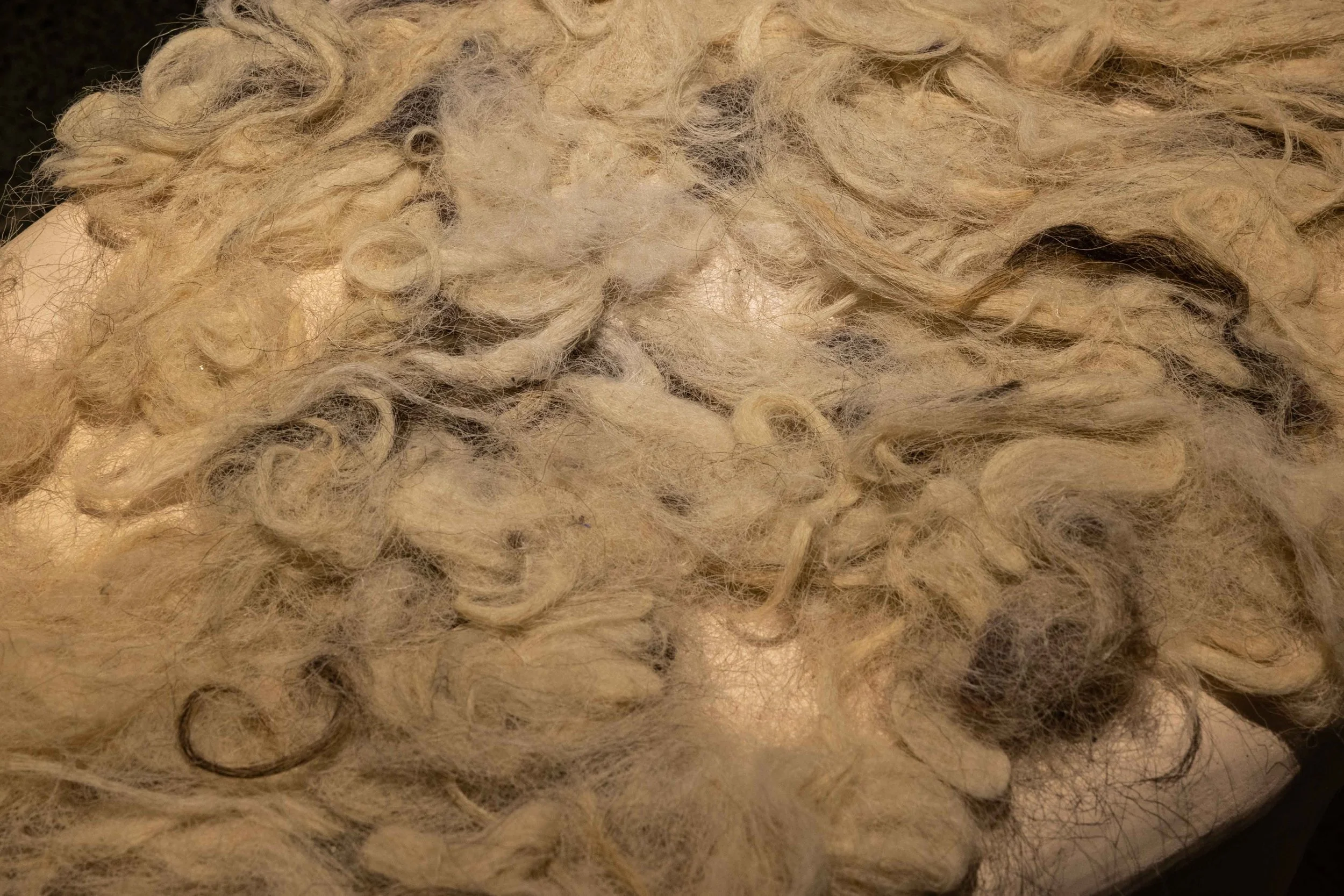
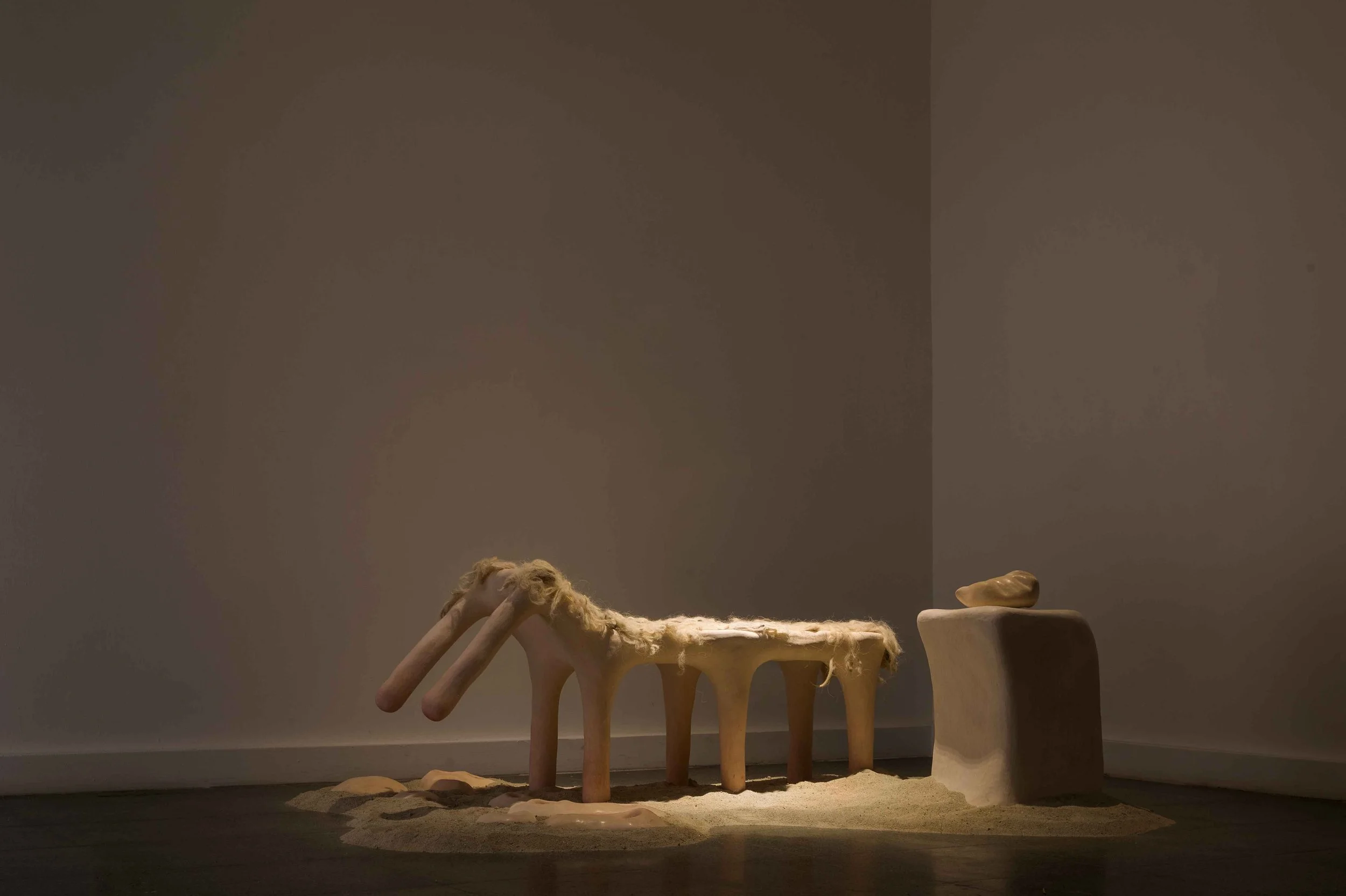
Merey Şenocak’ın kişisel sergisi Fosiller, Adi Taşlar, Değerli Taşlar, 10 Şubat Cumartesi günü 5533’te açılıyor. Sanatçı, tanışmakta olduğu kenevir bazlı yapı malzemesi “hempcrete”e ve kireçle sıvama metodu “tadelakt”a dair teknik ve duyumsal çıkarımlarını, bu yöntemle ürettiği bir seri heykel aracılığıyla izleyiciye sunuyor. Her bir heykel, sergiye taşıdığı imgeyle ve yüzeyinden okunan izler, içine gömülü sesler veya iliştirilmiş nesneler yardımıyla orada olmayan bazı bileşenleri ve iştirakçileri işaret ediyor. Sergiye eşlik eden kurgusal bir harita ise, bahsi geçen üretim tekniğinin sergi sınırını aşan coğrafyasını takip edebilmemiz için bize sanatçının kişisel izleğini gösteriyor.
Sergi ismini 1565 yılında doğa araştırmacısı Conrad Gesner’in taşları araştırdığı, isimlendirdiği ve gruplandırdığı kitaptaki bir bölümden alıyor. Sanatçı, sınıflandırmayla oluşan değer hiyerarşisini, sanat üretimini kapsayacak şekilde inceliyor. Doğal varlıkların belirli soyut biçimlerle ölçütlenerek birbirinden pahaca ayrılmasına dair olgular, sergide üretim-tüketim ekseninde ele alınıyor. Yoğun el emeği gerektiren teknik, dokunma eyleminin, şefkat gösterme, sahip olma, evcilleştirme gibi farklı araçsallıklarına dair düşünceleri beraberinde getiriyor.
Sergi Haritası.pdf
******************
Fossils, Ordinary Stones, Precious Stones
Merey Şenocak
10 February — 2 March 2024
Exhibition photos: Emirkan Cörüt
Booklet design: İlayda Tunca
Poster design and booklet illustrations: Ali Mert Değirmencioğlu
Text: Ekin Tümer
Press release
Merey Şenocak’s solo exhibition Fossils, Ordinary Stones, Precious Stones opens at 5533 on Saturday, February 10. Through a series of sculptures, the artist exhibits her technical and perceptual inferences on hemp-based building material "hempcrete" and lime plastering method "tadelakt", which she has been learning about. Through the image conveyed, through traces visible on the surface and the embedded sounds or attached objects, each sculpture signals elements and participants that are overlooked. A fictional map accompanying the exhibition shows us the artist's personal trajectory in order to trace the geography of the aforementioned production method that transcends the boundaries of the exhibition.
Fossils, Ordinary Stones, Precious Stones is named after a chapter in a book written in 1565 by the naturalist Conrad Gesner, in which he researched, labeled and categorized stones. Şenocak investigates the hierarchy of value associated with classification as it applies to art production. The exhibition addresses the phenomena of the division between natural assets by measuring them in certain abstract forms and separating them from each other in terms of value, on the axis of production-consumption. The labor-intensive method used during the production process raises questions on different instrumentalities of the act of touch; such as compassion, possession and domestication.
Exhibition Map.pdf